Skip to content

Posts tagged ‘Painting’

The Ghent Altarpiece – Art & Crime

Stealing the Mystic Lamb cover

Now that its snowing in New England, I’m staring to think about a potential European vacation next year.  I’ve become fascinated by one massive piece and somehow have got to get to Belgium.  This fall I read Noah Charney’s Stealing the Mystic Lamb which describes the exciting life of the most stolen work of art ever – The Ghent Altarpiece.  A captivating artwork and a suspenseful story, the book made me want to study the painting in its home cathedral.
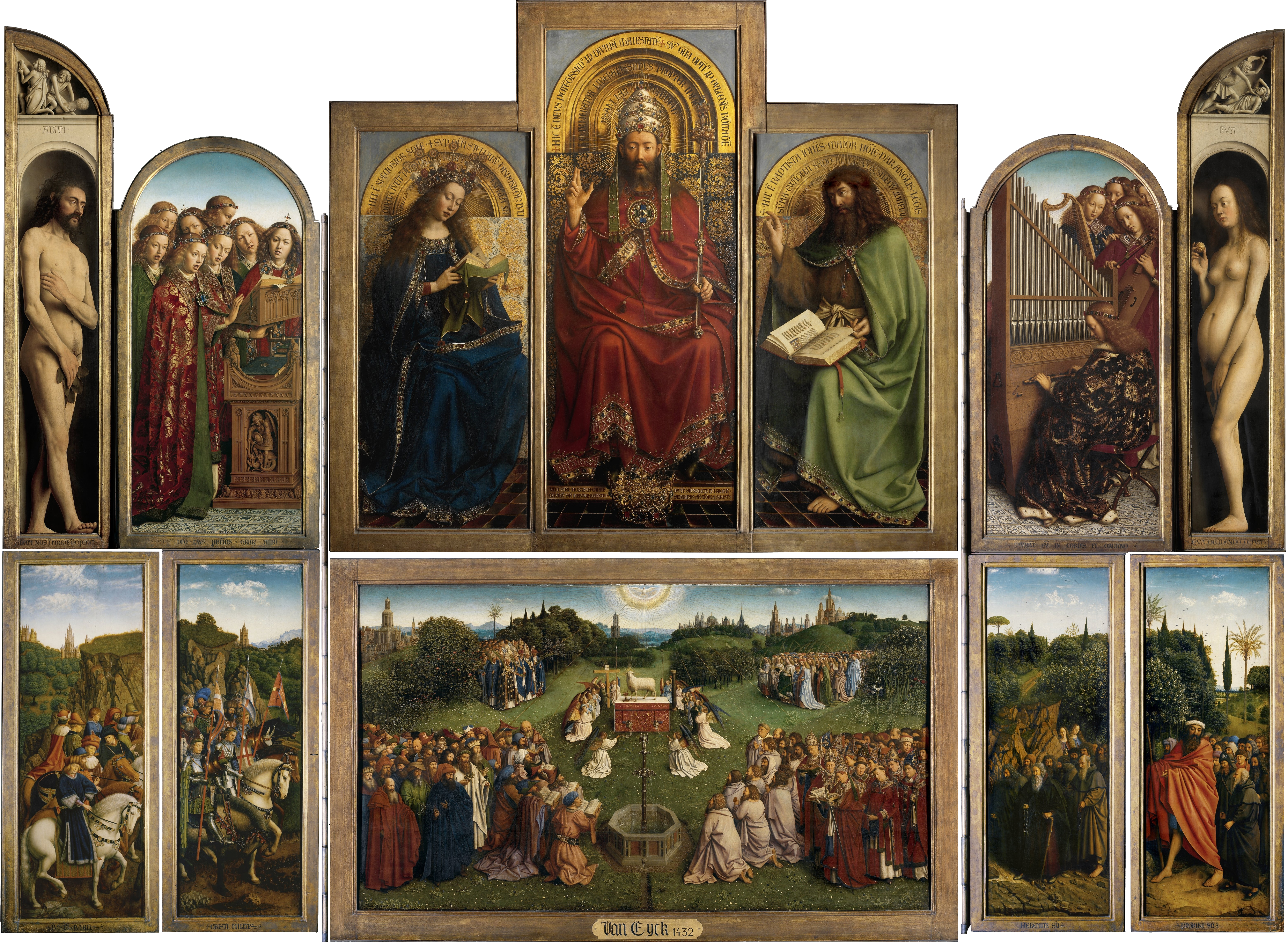
Jan van Ekye’s 1432AD masterwork comprised of 24 panels is known for its luminous, naturalistic and detailed images.  The book begins with an analysis of the extraordinary iconography.  The altarpiece was designed with two massive doors showing the Annunciation, Saints, Prophets and its two patrons in prayer.  When opened on Easter and feast days, you can see a glorious scene of God enthroned, angels, Adam, Eve and a procession of holy men and women visiting the altar of a holy sacrificial lamb.  For a time period in which religious imagery and symbolism was fairly straight-forward, van Eyke pulls from some interesting theology to create the namesake Mystic Lamb panel and others.  For example, the central royal figure is God but he is depicted with attributes more frequently associated with Jesus (two finger blessing, flanked by Mary and John the Baptist, youthful appearance), thus blurring the line between these two entities of the Trinity.

The historical discussion of the painting and its commission is disappointingly short because very little information survives.  I did at least enjoy the discussion of Hubert van Eyke, Jan’s brother, who is believed to have started the piece and left it to his brother Jan to finish on his death.  Hubert’s overall contributions in the painting, planning or preparations of the altarpiece are still under debate.

John the Baptist - van Eyke, Ghent Altarpiece

Expertly executed grisaille image of John the Baptist meant to resemble stone on the subdued outer panels

In the early 20th century, two panels were stolen.  The description of the events surrounding the theft read like a real life Dan Brown novel!  A crime which has never been solved, the tale is filled with conspiracy, weird ransom notes, unusual inconsistencies in the evidence, financial scandal, railway luggage tags, poor police work and of course, Nazi’s.  Ultimately, the panel of the Righteous Judges has never been found; some believe it is still hidden in the church while others believe that the replica panel created by a local art conservator simply covers the original panel.

Righteous Judges panel - Ghent altarpiece

Replica by restorer Jef Van der Veken of the “Righteous Judges” panel, on display today

The Ghent altarpiece was stolen during World War II and hunted down by the allied “Monument Men”.  The chapter describing this process begins slowly with a lengthy description of international governmental organizations set up to protect art.  The story then proceeds too quickly to several, barely connected rescue teams with a large confusing cast of characters.
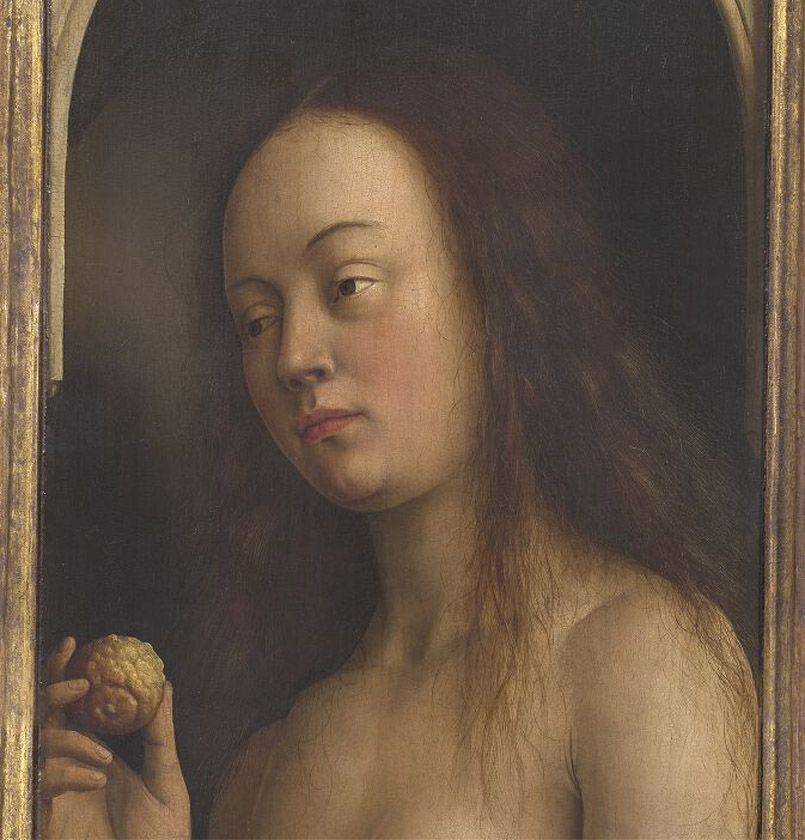
Eve - Jan Van Eyke, The Ghent Altarpiece

Adam and Eve’s revolutionarily natural appearances have shocked viewers over the centuries

In order to understand how the altarpiece became a victim of war, Noah Charney includes a length but very fascinating history of museums.  The narrative traces the evolution of art as booty following a conquest, to the status of art as sacred national or cultural objects worth fighting for.  Surprisingly, the display of plundered art by Napoleon directly led to the establishment of the Louvre.  The practice continued to World War II in which Hitler had a list of target art destined for either his own use or repatriation back to Germany.  The ruthlessness and organization of the Nazi art hunters is a chilling section for anyone who loves art.

Ghent altarpiece jewel detail

Detail from Mary’s jeweled robe with scale bar.  The high quality digital images allow for very detailed study of the Ghent altarpiece

I may not need to go to Belgium next year after all.  I can “see” the Ghent Altarpiece anytime thanks to a massive digitization project.  The Getty Foundation sponsored Closer to Van Eyke: Rediscovering the Ghent Altarpiece which produced high quality photography and scientific analysis of the panels following cleaning and restoration.  All of these images are available free online.  Given that the priceless artwork is shielded in a protective case, you may actually be able to see the brushwork better online than in person.  At the very least, read the book and decide for yourself how long you want to spend visually traversing this masterpiece online or on an airplane to see it in person!

Dismantling the central panel of the Ghent altarpiece

Dismantling the central panel of the massive Ghent altarpiece for conservation

(Some detail images of the Ghent Altarpiece used herein come from the Closer to Van Eyke: Rediscovering the Ghent Altarpiece project and are reproduced for educational purposes.)

***UPDATE: I finally got to see the Ghent Altarpiece in person!  Read about it here.***

ArtSmart Roundtable – Types of Self Portraits

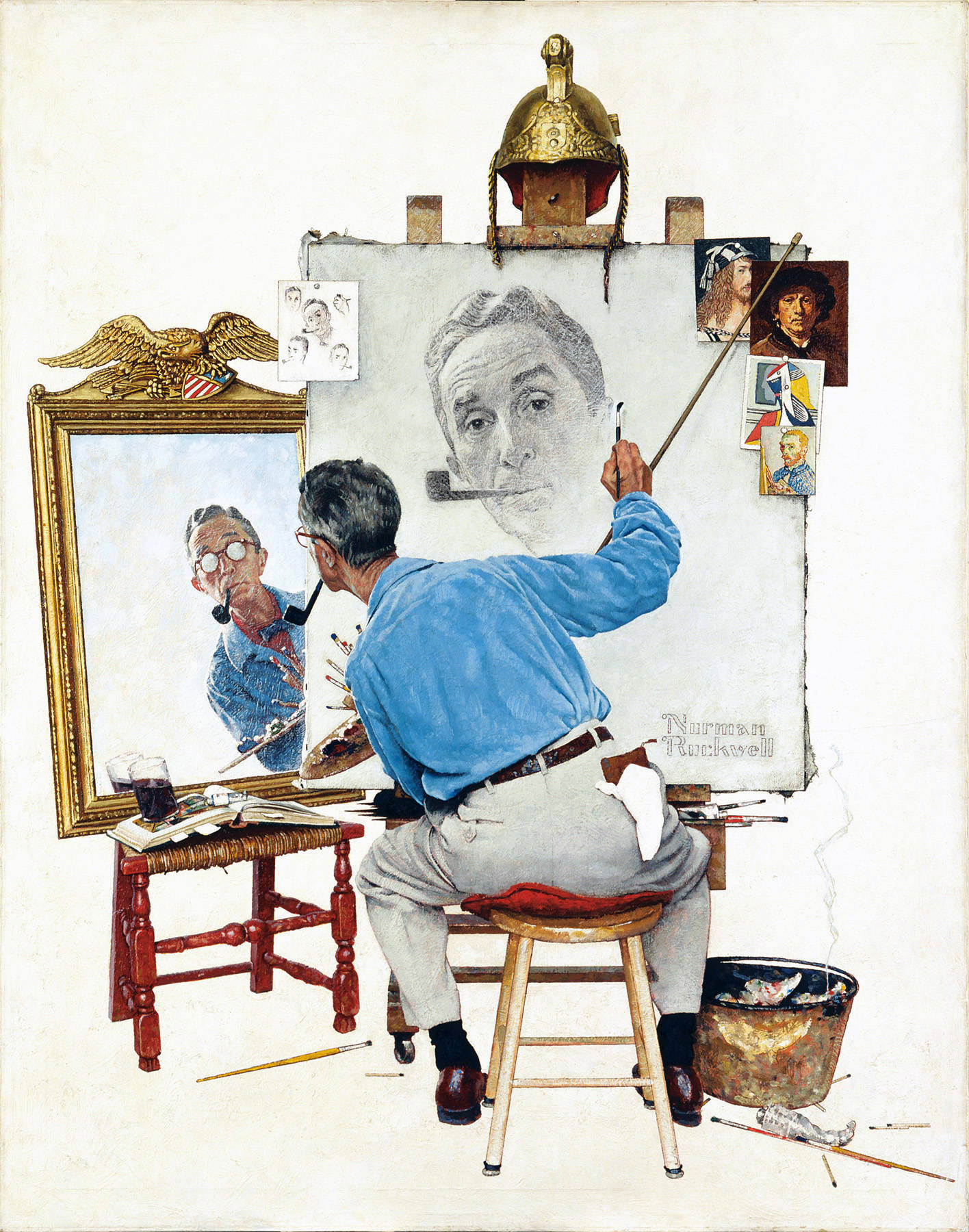
Norman Rockwell Triple Self Portrait 1960

Norman Rockwell, “Triple Self Portrait”, 1960 (Norman Rockwell Museum, Stockbridge, MA)

It’s the beginning of November and time for the monthly ArtSmart Roundtable in which several art history-loving travelers post on a theme.  You can see links at the bottom to the other posts in the group.  I’ve always loved portraiture, but for November’s ArtSmart Roundtable on art genre’s, I am going to focus on a special kind of portrait – the self-portrait.

Read more

The Friedrich Wahle Project – Mission Accomplish! (at least part of it…)

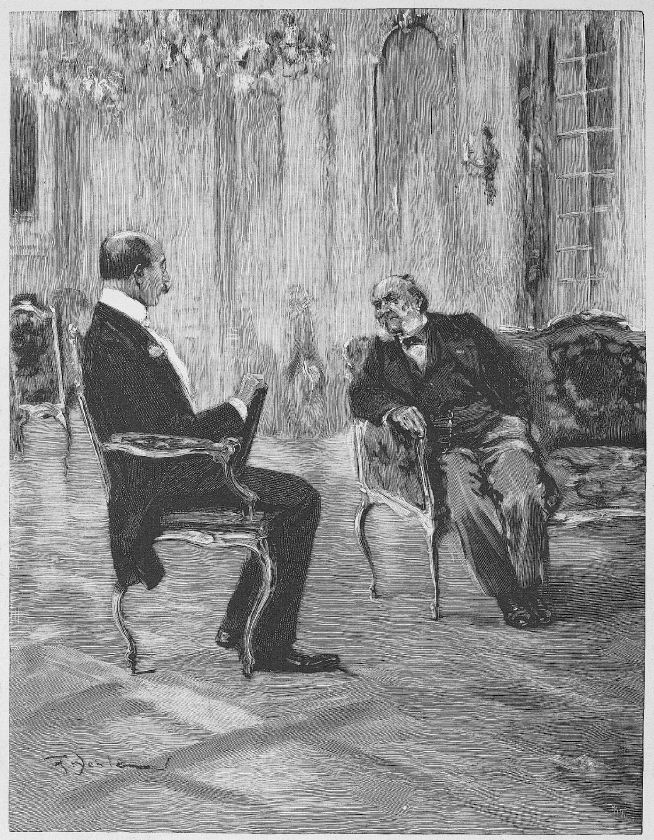
Well look what I found in the July 21-27, 1901 issue of Fliegenden Blätter:

Friedrich Wahle - Discourse in Fliegende Blatter

Familiar, no?

I finally found my painting!  So there you have it, The Discourse was in fact created as an illustration as I suspected.  The engraving was done by “Willis” and signed in bottom right corner.  While not as beautiful as the oil painting, I am impressed by the amount of scenic detail picked up in the print version.  The engraver even reproduced the broad diagonal strokes in the flooring which seem like such an after thought on the part of Wahle, likely meant to be cropped in the magazine lay-out process.

The print does settle one detail that I’ve been debating since I first saw the painting.  For a work mostly done in muted blue and gray, the little red dash on the old man’s lapel always seemed like either a later addition or a playful detail.  I’m happy to report that it seems to be reproduced in the magazine and must have been original to the image.

Friedrich Wahle - old man closeups

But what really matters is the accompanying text.  As an illustration, what is the story here?  Apparently the old man is a wealthy banker and the younger man is a Baron with financial problems.  The image is entitled, “Ein Gemüthsmensch (A good-natured fellow).”  I owe a big thanks to my fluent aunt and German uncle for the following translation:

“Gut denn, Herr Baron, ich gebe Ihnen meine Tochter  und arrangire Ihre Schulden … doch wohl gemerkt, mit einem Theil der Mitgift!” …” Uber Herr Commerzienrath, Sie werden Ihr Kind nicht berauben?!”

“Ok then, Mr. Baron, I will give you my daughter and take care of your debts, but it comes out of the dowry!”   “But Mr. Bank President, do you want to deprive your child?!”

So, the Baron is trying to get both a wife and have all his debts paid off.  He guilts his creditor with paternal responsibility as a means of getting the full dowry.  It sounds like a social critique of the “dollar princesses” who used their new industrial-age familial wealth to marry into titled families.  I suppose this was clever, if not funny, in 1901 but the humor doesn’t really translate today.  There are a few other lame jokes on the same page, but at least this one is cute:

The Big Feast.  Man (to the butcher): Was everything over the top at your daughters wedding? ….. O, let me tell you, the pig we ate could have taken a bath in all the Champagne we drank!

I’d like to look more closely at and translate other pages in Fliegenden Blätter to see if the jokes get any better.  It’s hard to believe that such beautiful illustrations by Wahle, Reinicke, and Soblittgen were paired with silly jokes.  For comparison, I might also check out the UK’s 19th century humor magazine Punch to see if century-old English jokes hold up at all.

I still find it hard to believe that my painting, and frankly all the other gorgeous images in the magazine, might be just lame jokes.  It speaks to the available artistic talent and maybe to the quality of journal the public was use to.  I’m still divided on whether Wahle was supplied the text/joke on which to base the image or if he created scenes which were then matched as best as possible to available stories.  “The Flirtatious Officer” seems to suggest that the text influenced the image.

Vor der Oper - Friedrich Wahle

The Wahle market remains strong in Germany. Vor der Oper. (Before the Opera) sold by the Neumeister Auction House, Munich in September 2012 for 2600 Euro!

So what’s next now that I found “my Wahle”?  I will continue to work on Wahle’s biography and more importantly his catalog – wrapping up my review of Fliegenden Blätter and then looking at other 19th century magazines.  With paintings popping up every year (and most recent here), I continue to watch the auction market.  It’s interesting to put each piece into context of his entire career portfolio so I like seeing what surfaces for sale.  I also have references to Wahle’s participation in other art shows (besides the Munich Secessionists) that I will start researching too.  It’s encouraging to find my painting and makes me more determined to finish what I started!

To read up on the entire Friedrich Wahle Project so far, click here.

The Nice Thing About Hapsburg Faces

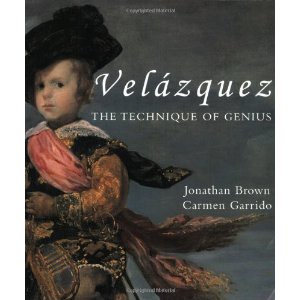
Velazquez: The Techniques of Genius

I spent the last of my birthday gift cards on a fantastic technical analysis of Diego Velázquez by Jonathan Brown and Carmen Garrido, Velázquez: The Technique of Genius.  It’s filled with x-ray imaging, pigment analysis and critical examination of brushwork.  Since I am a huge art conservation and painting construction nerd AND a big Velázquez fan, I love this book.  There is a lot of amazing information in here, but there was one little insight that jumped out at me and I had to share.

Read more

A Walk Through the Art Institute of Chicago

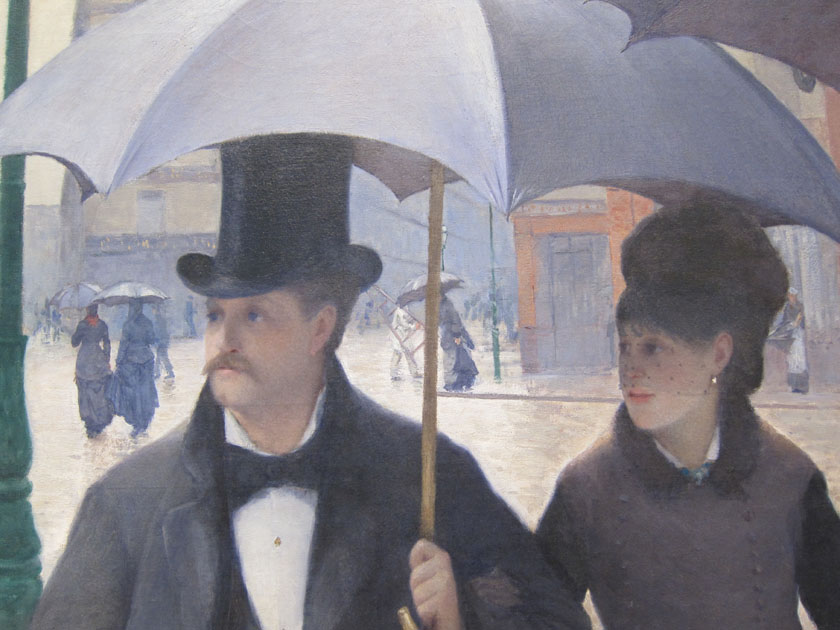
For all the masterpieces at the Art Institute of Chicago, sometimes it is good to wander slowly and find new favorite paintings.  Here’s a few works and details that jumped out at me this summer.

Caillebotte - Paris Street, Rainy Day, detail

Read more