Skip to content

Posts tagged ‘Painting’

Van Gogh and the Olive Tree
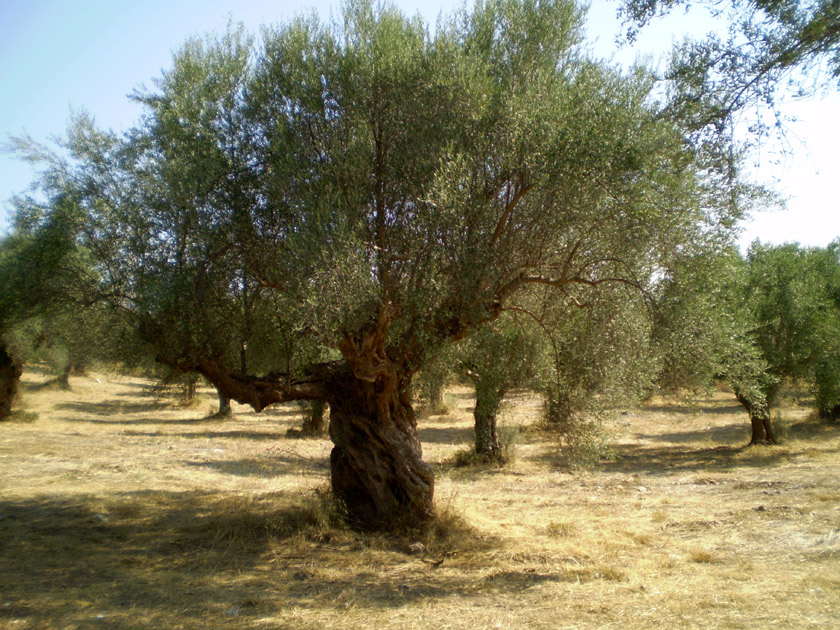
olive tree in Greece

It wasn’t until I visited Greece a few years ago that I really got a good look at live olive trees.  Despite being an agricultural powerhouse, the trunk of the olive tree is twisted and deeply etched.  The foliage is expansive but not dense.  In the shade, the bark and leaves appear to have grey-blue undertones.  These are visually interesting, complex and very hardy looking trees.  With a new found appreciation for these Mediterranean wonders, a huge light-bulb went off at the (abridged) Van Gogh Museum in Amsterdam.  The olive tree was possibly the best subject in the natural world for Vincent van Gogh and has resulted in some of my new favorite paintings in this catalog.

Read more

Art Frames and Friedrich Wahle

Admittedly, my Friedrich Wahle research has been on the back-burner since I found the print version of my painting.  I’ve mostly been trying to monitor the auction market where a few of his paintings surface every year.  Interestingly, I happened across a television appraisal of a Fritz Wahle painting on Kunst & Krempel (Art & Stuff), the German version of Antiques Roadshow.  It’s a well executed scene of a couple sharing a few private words at a dinner party which I think the show entitled “Eavesdropping”.  While the image is beautiful, it was the frame that really got my attention – it is the same as the one on my Wahle!

Friedrich (Fritz) Wahle, "Easedropping" as appraised on Germany's Kunst & Krempel on 22 Sept 2012

Friedrich (Fritz) Wahle, “Eavesdropping” as appraised on Germany’s Kunst & Krempel on 22 Sept 2012 [1]

Read more

ArtSmart Roundtable – Images of Mary Magdalene

The monthly ArtSmart Roundtable brings together some of the best art history-focused travel blogs with a post on a common theme.  For February we are discussing the iconography of a few historical, religious or mythical figures to help you “read” some of the images you may encounter on the road.  I’ve always thought that understanding the context and source material for imagery really deepens your appreciation for art.  You can find links below to all the group’s articles this month.

Flanders Book of Hours Illuminated Manuscript - St Lawrence

The martyr St. Lawrence was “grilled” to death and is usually seen with a metal cooking rack. Book of Hours, 1510, Flanders, Syracuse University Special Collections.

I love seeing Saints in European art because it is so easy to tell who everyone is.  There is a characteristic object or dress to each figure that helps you decipher his or her identity.  I’ve always been partial to John the Baptist with his wild man appearance and camel hair attire.  But what about the saints with less straight-forward stories?  Theological and historical confusion has long shrouded St. Mary Magdalene; consequently, she has a complex visual iconography.

Read more

Painted Roman Statue

By traveling in Greece and Turkey, I’ve learned a lot more about Classical art and architecture.  I find myself describing the ancient sites I’ve  seen and usually slip something in about how “bright and colorful” it must have been.  That usually stops the conversation.  No one believes that ancient Greek and Roman statues were painted!  I myself am still trying to wrap my head around what that would have looked like.  But it’s true, and now I have my own photographic evidence that statues were colorful:

Painted ancient Roman general statue in Corinth

Read more

The Isenheim Altarpiece – Art for the Ill

I enjoyed last week’s virtual visit to the incredible Ghent Altarpiece but it got me thinking about other major church pieces I would like to see in person.  While this may not be the most intuitive work of art to bring up, I have always been impressed by the suffering, twisted and tortured Cruxification of the Isenheim Altarpiece now in the Alsatian city of Colmer, France.

Matthias Grunewald, Isenheim altarpiece in situ, Colmar, France

Isenheim altarpiece in situ at the Musee d’Unterlinden, Colmar, France

Read more