Skip to content

Posts tagged ‘churches’

The Ghent Altarpiece in Person

Some people travel to new countries to expand the percentage of the world they’ve seen.  Some less adventurous but equally ambitious travelers try to visit all 50 US States, all the Major League baseball parks or some other coherent list of places.  Personally, I travel to see art.  Jan van Eyck’s Ghent Altarpiece was high on my “To Do List”.  Sadly, efforts to protect and preserve the work really interfered with my enjoyment of the painting, making this art pilgrimage a little disappointing.

St John the Baptist, Ghent Altarpiece

My favorite panels are the three mystic figures in the upper central section of the altarpiece – Mary, God the Father/Jesus, and St. John the Baptist (shown). (Photo: Wikicommons)

Read more

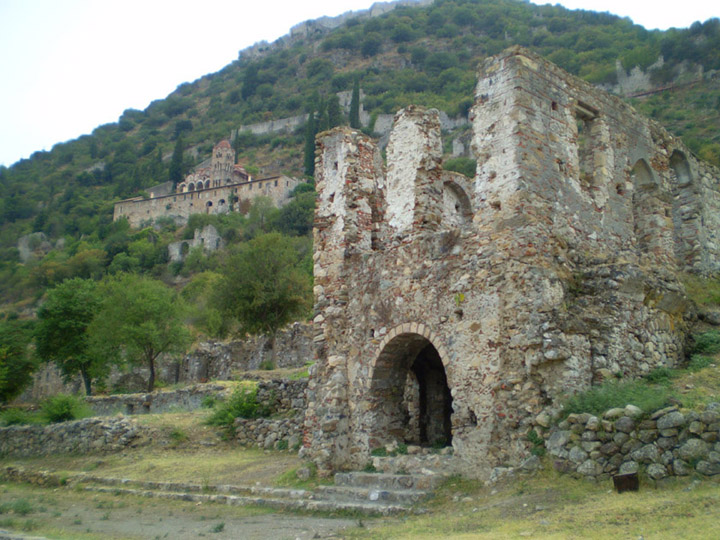
Byzantine Fort City of Mystras, Greece

Monestary of Pantanassa, Mystras

Looking up from the ruined domestic buildings of the lower city, you can see the active Monastery of Pantanassa further up the mountain in the the Upper City of Mystras, Greece.

So many European cities are jumbles of art and architecture, a testament to the evolving history of the urban area.  Beneath these modern cities are fractured layers of a Renaissance, Gothic and Ancient past, but you have to try hard to imagine how things looked during any one period.  It’s truly amazing to find a city that retains its character from one specific age.  The abandoned Byzantine city of Mystras in the mountains just above Sparta in the Southern Peloponnese, is one such frozen city.  You can walk through the ruined streets and largely intact religious buildings of this UNESCO World Heritage Site and be right back in 1350 AD.

Read more

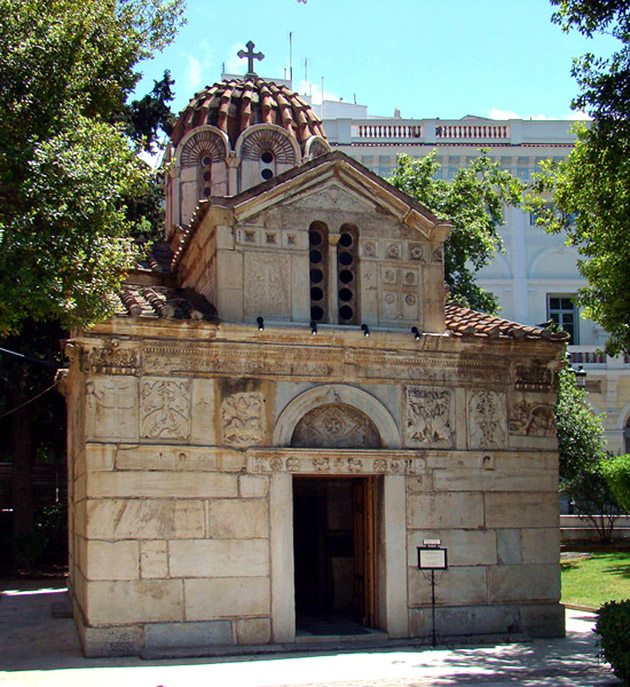
Recycled Stone – Christianized Art in Athens

While this practice seems unthinkable today, across the Mediterranean, ancient Greek and Roman structures were salvaged for building materials in subsequent centuries.  Given the prevalence of the Catholic Church in the Middle Ages, pagan buildings were at best a curiosity.  The Parthenon in Rome is said to have only survived because it was converted into a church.

The Pentelic marble used to construct ancient Athens proved to be too alluring for Byzantine builders.  You can see blatant example of stone theft in the piece-meal construction of the 13th century Panagia Gorgoepikoos Church in Athens.  While the materials were stolen, the care with which pieces were selected and incorporated suggests some appreciation for classical art.

Panagia Gorgoepikoos, Athens

13th Century Panagia Gorgoepikoos (The Madonna who Quickly Hears) Church, Athens (Image adapted from the web)

Read more