Skip to content

Prehistoric sites of Brú na Bóinne (Newgrange, Knowth and Dowth)

On my Irish road trip, I saw a lot of impressive things – jagged mountains, green valleys and wild coastline.  I also saw a lot of historic things – overgrown monastic ruins, abandoned farm houses and the ever present round tower.   But the most impressive and historic sites were Newgrange, Knowth and Dowth, three Neolithic mound tombs along the Boyne River and a UNESCO World Heritage Site.

Newgrange, part of the prehistoric Brú na Bóinne complex

Predating the Egyptian Pyramids, the mounds are passage tombs, meaning they contain one or more stone lined corridors where traces of human remains were found.  Newgrange is the largest and more famous of the three.  It aligns such that on the winter solstice the sunrise illuminates the inner chamber in what must have been a highly potent spiritual moment for its prehistoric builders.  You are allowed to enter the somewhat claustrophobic passage and view a chamber formed by an impressive corbelled ceiling.

While it looks beautiful, the stone exterior of Newgrange is a reconstruction from archaeological guesswork.  The white stone and river stone in the facade can be traced to sites quite a distance away.  It is possible that the stones were brought as offerings and left outside the portal and therefore might never have been part of a collapsed stone wall as the restoration assumes.

Stone carvings at Knowth

I am far more interested in prehistoric carvings and so I enjoyed Knowth a little more.  Both mounds are encircled with meter tall stones but those around Knowth are more extensively decorated.  While it is easy to try an interpret the swirls (everlasting life? rebirth?) and organized dots (there’s 12 on one rock, is this a lunar year reference?), I prefer to enjoy them for their design and to appreciate the ancient conviction that created these deep stone markings.  You cannot go far inside the Knowth passages but you can climb on top of the mound.  The Knowth site was occupied by humans in later periods so in restoring the prehistoric site, archaeologists had to go down through the remains of a Cistercians farm, Norman dwelling and Bronze Age village.

Newgrange as viewed from atop Knowth

The sites are only accessible from the Visitor Center which runs timed tours of 15-20 people by shuttle bus to each tomb.  You can choose just to see just one tomb but you are completely cheating yourself if you don’t visit both Newgrange and Knowth!  (Dowth is closed for posterity with plans to excavate it someday.)  During the obligatory wait before your tour time, the visitor center has a good video about Neolithic religious practices and some interesting exhibits.

Tips for Visiting

While the River Boyne site could be an easy day trip from Dublin, it’s worth spending the night nearby.  (And this way, you can see the carved crosses at Monasterboice before the tour buses show up!)  I found the Scholars Townhouse Hotel in Drogheda about 15 minutes from the UNESCO site.  The hotel is decorated with dark wood paneling and antiques making it feel elegant but very cozy.  When we arrived in the evening, candles lit the reception area and the staff could not have been nicer.  I loved the huge carved Victorian bar and the Cromwell battle ceiling paintings in the breakfast room.  (Disclosure: I am not receiving anything for writing about the hotel.  I just liked it and thought it was a good tip to pass along.)

Photo of the Week: National Cathedral Damage

Sad to see a little damage to the National Cathedral in Washington DC caused by the 5.8 earthquake Tuesday.  The East coast of the US doesn’t expect this sort of thing!

Angel down at the Washington National Cathedral (Photo: Connor Simpson, The Atlantic Wire)

For more photos summarizing the damage, see the Cathedral’s photo gallery and the  Atlantic Wire gallery.

Martin Luther King Jr Memorial Dedication August 28th

The Martin Luther King Jr. Memorial opened to the public today and will be dedicated in Washington, DC next weekend.  Information and concert tickets can be found on the official event website: Dedicate the Dream.

26 Aug 2011 UPDATE: The official dedicate date has been moved to an undeclared date in September or October due to the arrival of hurricane Irene in DC this weekend.  Friday and Saturday morning events are still planned.

At the time this was proposed, the World War II memorial had just opened and there was some groaning in DC that the Mall was too crowded for anything else.  To me, the National Mall is both an expansive green space and a record of our history, culture and heroes.  I am glad a nice spot of the Tidal Basin was set aside to honor MLK Jr. specifically and in a broader sense the US civil rights movement.  (An African-American History and Culture Museum is slated for the Mall in 2015 which is good because the only Museum remotely dedicated to the same subject matter was in Anacostia before – way, way off the beaten tourist path.)

One main features of the MLK site is a large bolder cut and opened in the middle called the “Mountain of Despair”.  The removed piece is set closer to the water and is called the “Stone of Hope”.  It is 30 ft tall and features a standing portrait of MLK emerging from the stone with arms crossed.  Flanking around the tidal basin, out from the Mountain stones, are slowly tapering stone walls engraved with quotes by Martin Luther King Jr.  Given the position of the monument on the Mall and its open lay-out, this seems like a very accessible and engaging space.  I see people picnicking and chatting in eye-sight of MLK Jr. along the Tidal Basin.

You get a good sense the site from this fly through video produced by the National Memorial Project Foundation:

As you would imagine, there has been the obligatory criticisms of the statue: it was made in China by a Chinese man, it’s not a good likeness, he looks confrontational, whatever.  The critique that I find the oddest is that the statue is too tall.  In fact, the MLK figure is just about as big as his nearest neighbors on the Mall: Lincoln with pedestal is ~30.5ft and Jefferson with pedestal is ~25ft.  MLK seems so much larger because he is not in a temple like those other two which defines a visual space and makes the figure seem smaller.  Likewise, you can go right up to him and so your viewing perspective changes to a more extreme angle.  I will concede that the stone block itself is pretty huge when viewed in the round.  For scale, here’s how some of my favorites on the Mall compare: (Gandhi is technically in Dupont Circle in front of the Indian Embassy but I thought he belonged here.)

Martin Luther King Jr. statue size relative to some of the notable DC memorial statues and a 6′ tall person which gives a better sense of scale.

To me the most powerful memorials are personally engaging and this often means that the elements exist on the viewer’s level.  For example, imagine how awesome it would have been to put a life-size statue of MLK Jr. on the steps of the Lincoln Memorial!  You could stand next to him and look out over the Mall while reading his “I Have a Dream” speech.  At least the newly constructed MLK Jr. Memorial lets you wander through his quotes and stand amid the literally and metaphorically looming mountain stones.

More than anything though, I hope that the MLK Jr. Memorial in person conveys his deep religious convictions and self-sacrifice.  As Martin Luther King Jr. said reflecting on how he wanted to be remembered, “Yes, if you want to say that I was a drum major, say that I was a drum major for justice. Say that I was a drum major for peace. I was a drum major for righteousness. And all of the other shallow things will not matter.”

I’m looking forward to visiting DC soon to see this new Memorial in person and hope you get a chance to check it out too!

10 Days in Mainland Greece Itinerary

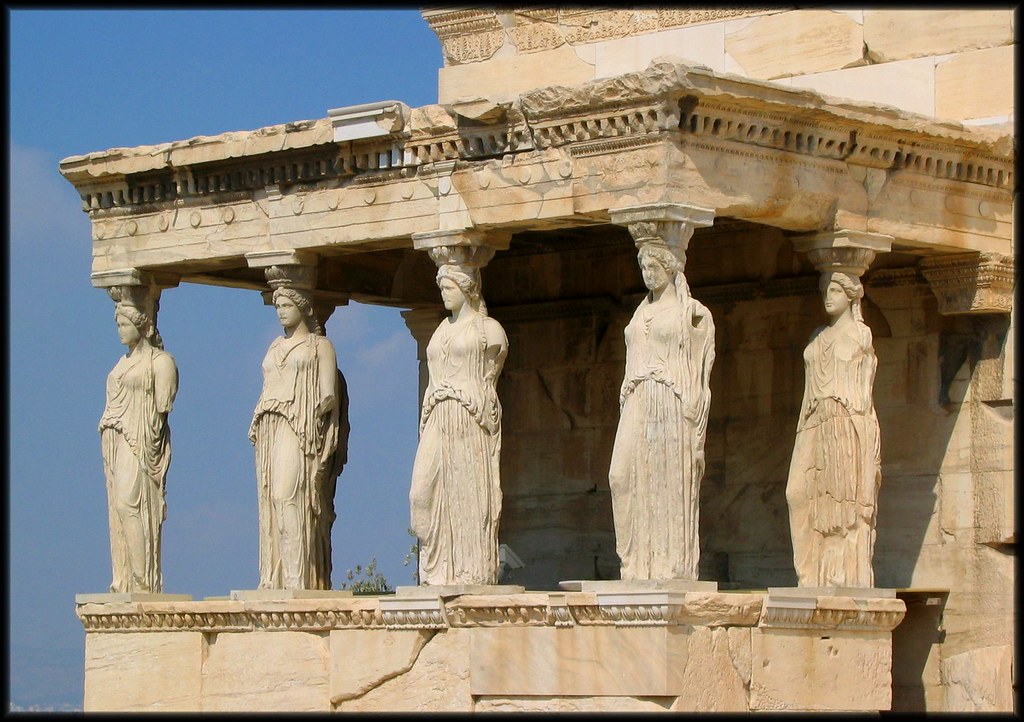
Porch of Caryatids, Erechtheion, Athens (Photo: Amplified-Photography)

I am going to be able to sneak in a trip to Greece this Fall!  Tickets and hotels are booked for September and the departure countdown has begun.  Obviously there is so much to see in Greece so I had to focus the trip.  With only 10 days, we just going to visit mainland Greece and will save exploring the islands for another trip.  It’s always better to pace yourself and try not to see too much.  That being said it is gong to be a busy trip!  Below is my itinerary for 10 days in Athens and mainland Greece.

10 Days in Mainland Greece driving route

Day 1 – Arrive in Athens in late afternoon. Basic wandering and orientation, eat delicious food.

Day 2 – Athens: Parthenon, Acropolis Museum and Roman Agora

Day 3 –  Athens: National Archaeological Museum, Kerameikos (Cemetary) and Syntagma square, explore the neighborhoods (maybe see a play or concert that evening?)

Day 4 – Pick up car, drive to Thermopylae (yes, you’ve heard of it), visit Delphi

Day 5 – Monastery of Hosios Loukas, Corinth, arrive in Olympia (this is the longest driving day of two 3hr blocks)

Day 6 – Visit Olympia – high probability I’ll run through the stadium, drive to Kardamyli

Day 7 – Morning exploring Kardamyli, drive to and explore Sparta

Day 8 – Visit medieval ghost-town of Mystras, drive to and explore Naplifon

Day 9 – Visit ruins of Mycenea, Tiryns and Epidaurus, back to Naplifon

Day 10 – Stop at Dafni Monastary on the way to the airport; leave for the US

Whew, what a trip!  I’m so excited!  This trip also includes 7 more UNESCO World Heritage Sites which is awesome!  I generally don’t like spending more than 2 or 3 hours a day in a car so this itinerary is paced with that in mind.  I let you know how that goes once I actually see what some of these mountain roads are like.  Other then a history and classical art binge, my other goals are to eat octopus, do some people watching, bring home a piece of art (most likely a modern reproduction given export rules) and enjoy Greece!

Of course I haven’t left yet, so trip suggestions are always welcome!

Photo of the Week: Corinth Press Conference

Press conference in Corinth (Photo: EPA/VASSILIS PSOMAS)

GREECE.- Minister of Culture, Pavlos Geroulanos, speaks to the public during a special ceremony at the Klenia Archaeological Museum of Acient Corinthos, Greece, 17 August 2011. Two Kouros-style marble statues, dating back to 6th century BC.The two statues, named the Kouri (plural) of Tenea , are on display in a specially designed exhibition hall at the museum. The statues were unearthed during an illegal excavation in Klenies district of southern Corinth prefecture. Police arrested antiquities smugglers in May 2010 and the statues were sent to the National Archaeological Museum in Athens for restoration. EPA/VASSILIS PSOMAS.    Story and Photo from Artdaily.org.

I have Greece on the brain because I will be there in less than a month!  More about my trip soon.