Skip to content

Posts tagged ‘travel’

Best Mountain Drive in Mainland Greece

The Greek mainland is arid and mountainous.   In a matter of minutes you can go from sea level to impressive elevations as we found out driving to Delphi from the coast.  I have always love the view down from the top of a mountain and there which quite a few contenders in Greece.  By far the most scenic stretch of road popped up as we traveled from Corinth to Olympia.

Best road in Greece

Specifically, I am talking about the mountain road from Levidi to Dafni as shown in the map below.  The high point (literally and proverbially) was the beautiful village of and the stunning valley views from around Langadia, or Lagkadia depending on spelling.

Most scenic drive in Greece

From Levidi, the road quickly climbed through slow switch-backs and hairpin turns.  The forest was dense but every so often there would a break to see the incredible drop into the valley and the smoothed, tightly packed range of mountains.  Pull offs to enjoy the view were scarce and small in size so you’ll likely need to back track if you miss one, but it’s worth it.  In tiny villages that clung to the mountain side, local life spilled out somewhat into the road making us slow down and wave as we passed through.

Hazy sunset over Langadia with miles of switch-back roads to go (Photo: DaydreamTourist)

Langadia

Langadia main square (Photo: Wikipedia)

While the mountain pass was beautiful, blind turns can be a little scary for any driver.  We set out late from Corinth and so it was 8pm when we reached Olympia and definitely dark.  I would try to get out of the mountains by dusk for best visibility.  Aside from the main national highway, Greek roads are decorated with memorials shaped like little Orthodox churches.  I presume these are to remember auto deaths; they serve as sad and constant reminders to drive safely. Luckily this stretch of mountain road is so beautiful you’ll want to drive slow just to make sure you can take it all in.

Roadside memorial in Greece

A church-shaped roadside memorials on a particularly tight curve in the road (Photo: DaydreamTourist)

Best Fortune Cookie Ever

Yesterday I had Chinese food for lunch and got the most inspirational fortune cookie ever!

Photo of the Week – Garden Creature

Peacock in the garden planters (Photo: DaydreamTourist)

My New Years resolution was to try to carry a camera with  me more often. I was pretty quickly rewarded for this in 2012!  After finishing up tasting at the Chateau Ste. Michelle Winery in Woodinville, Washington, I came outside to see this peacock perched on some planters.  While I am still getting use to my new camera, I like the composition and colors of this photo.

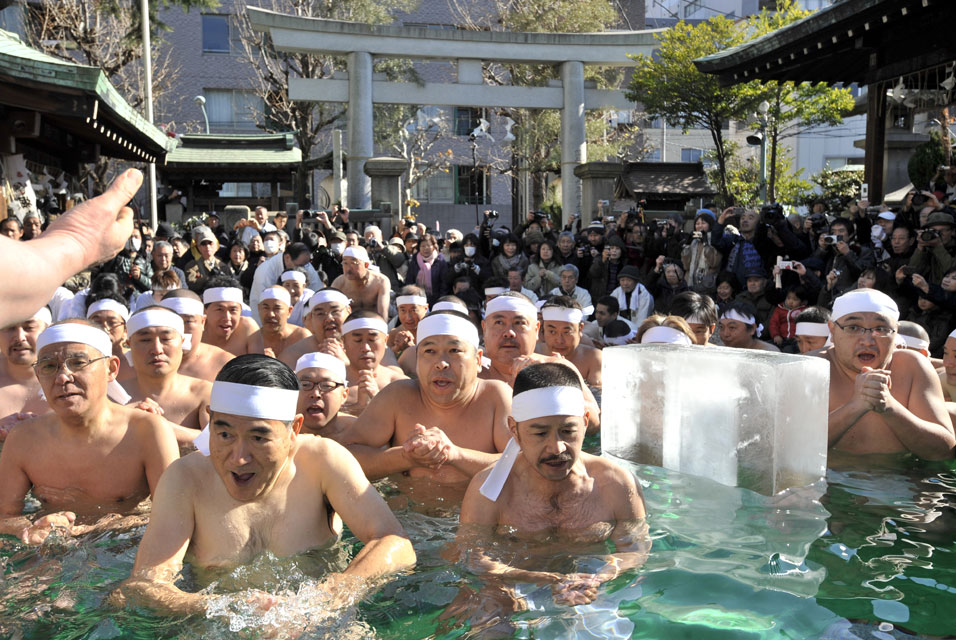
Photo of the Week – Polar Bears in Tokyo

Only because it has been so cold recently….

ritual ice water bath in Tokyo

Enjoying a cleansing polar bear swim in Tokyo (Photo: Kimimasa Mayama/EPA)

Participants bathe in icy water during a winter purification bathing or shinto-style polar bear bath at Teppozu-Inari Shrine in Tokyo, Japan, 08 January 2012 at the start of the New Year. Some people participate in purification bathing or swimming at the start of the New Year in Japan in the hope for their wellness. Photo: EPA/KIMIMASA MAYAMA.  Story and photo from Artdaily.com

The Concorde

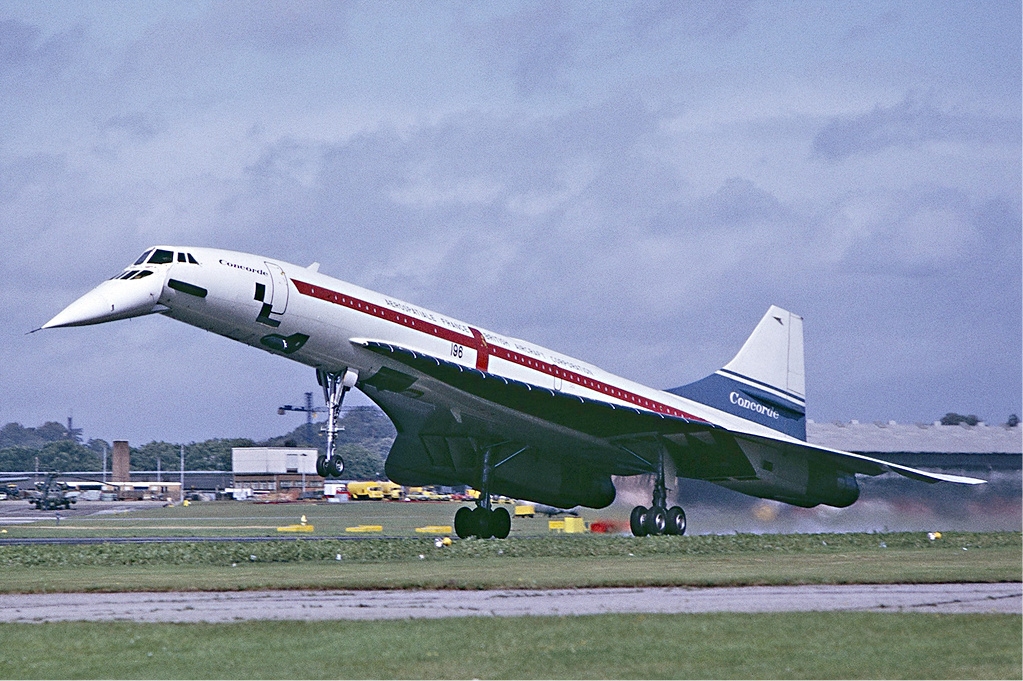
concorde landingWhile in Seattle, I stopped by the Museum of Flight near Boeing Field to visit one of the retired Concorde jets.  There is something really beautiful about the Concorde’s sleek supersonic engineering and its iconic pivoting nose.  Although an old and retired technology, to me it symbolizes innovation and luxuriously fast flight times.

concorde nose and profile

Concorde's profile

The Concorde was a joint project between Air France and British Airways and made its first scheduled flight on January 21, 1976  after over a decade of development, prototypes and test flights.  Twenty planes were produced.  The jets could reach Mach 2.0, or twice the speed of sound, thanks to four turbojet engines.  The heat generated in flight would cause the fuselage to expand by 8-12 inches.  Given the steep angle of approach at take-offs and landings, the pilots’ view of the ground was completely obstructed.  The droop nose, which bent to 12.5 degrees below the plane of the aircraft, was created to maintain the rigorous aerodynamics needed for supersonic speeds while still allowing for safe departures and arrivals.

In this short clip of an aborted Concorde landing, you can see that it flies more like a military fighter jet: (Thanks, Cranky Flier)

Upon breaking the sound barrier, pressure differences around the aircraft produce a loud sonic boom.  (Incidentally, this is not heard by passengers but by those on the ground.)  While this speed was a huge advantage for travelers on the Concorde, noise pollution concerns quickly lead to legislation that forbade supersonic commercial air travel over the US.  The Concorde was then limited to transatlantic or other ocean-going routes.

concorde's turbojet intake system

Hello Turbojets...

The Concorde holds the transatlantic transport record, making it from New York City (JFK) to London-Heathrow in just 2 hours, 52 minutes, 59 seconds.  The quick flight time makes for some interesting paradoxes.  If you were to leave London at 5pm, given the short travel time and 5 hour time difference, you would land in New York City at 3pm  – or before you left the UK!  On July 13, 1985 Phil Collins performed at the Wembley Stadium Live Aid concert, flew to the US on the Concorde and then joined the simultaneous Live Aid concert in Philadelphia.

concorde cabin

Concorde's narrow cabin with not quite first class seating

Passenger accommodations are reported to have been first-class on the Concorde, but walking down the aisle, the plane interior felt like a small commuter jet.  The seats themselves were definitely smaller than those you would find in first class on a Boeing 747.  It must have been a cozy trip for the ~100 passengers.

The high cost of operating the Concorde and a decrease in air travel post-9/11 led to their eventual retirement.  As demand dwindled, transatlantic ticket prices escalated up to $10,000-12,000.  The Concorde was therefore retired in 2003.  Several of the planes have made their way to museums purchased outright or like the one in Seattle, on loan from BA.  It was a great opportunity to visit a luxurious icon of modern air travel.

Concorde's tail colors

On a side note: special permission had to be granted for British Airway’s G-BOAG Concorde to fly to Seattle to become part of the Museum of Flight.  From NYC, the journey took only 3 hours, 55 minutes, and 12 seconds.  (I however had to spend about 6 hours making approximately the same journey.)