Skip to content

Posts tagged ‘history’

Byzantine Fort City of Mystras, Greece
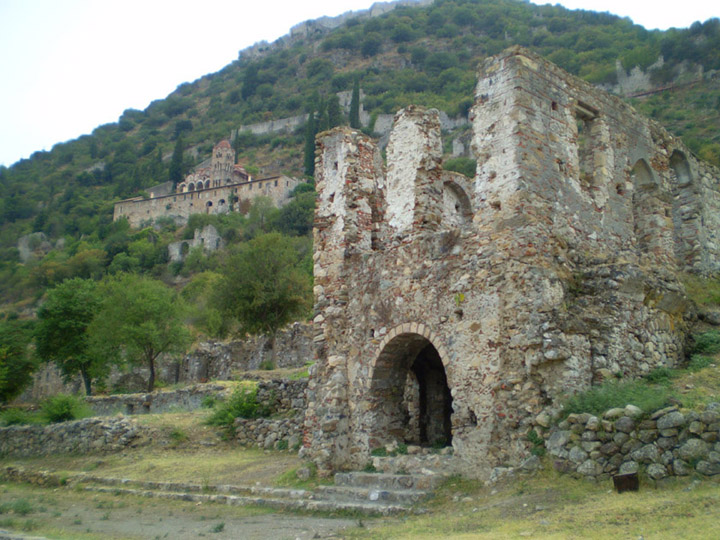
Monestary of Pantanassa, Mystras

Looking up from the ruined domestic buildings of the lower city, you can see the active Monastery of Pantanassa further up the mountain in the the Upper City of Mystras, Greece.

So many European cities are jumbles of art and architecture, a testament to the evolving history of the urban area.  Beneath these modern cities are fractured layers of a Renaissance, Gothic and Ancient past, but you have to try hard to imagine how things looked during any one period.  It’s truly amazing to find a city that retains its character from one specific age.  The abandoned Byzantine city of Mystras in the mountains just above Sparta in the Southern Peloponnese, is one such frozen city.  You can walk through the ruined streets and largely intact religious buildings of this UNESCO World Heritage Site and be right back in 1350 AD.

Read more

Curators Have All the Fun: San Diego’s “Behold, America!” Exhibit

How would you arrange pieces in an art gallery? Should paintings be placed in groups by artistic movement? Does it makes more sense to see everything in chronological order?  Should geographic differences and temporal differences rigidly divide works?

Time period, artistic movement, and geography are often used to organize a museum.  Imagine how many times you’ve entered into the first room of “old” art and then walk forward in time through each successive room.  Changing this classic approach, San Diego’s three major art museums put together something a little different which I thought made for a really incredible show.  They’ve combined works from their very unique collections into thematically based exhibits broadly entitled “Behold, America!” on display until Feb 12, 2013.

Behold, America! San Diego exhibit banner Read more

Painted Roman Statue

By traveling in Greece and Turkey, I’ve learned a lot more about Classical art and architecture.  I find myself describing the ancient sites I’ve  seen and usually slip something in about how “bright and colorful” it must have been.  That usually stops the conversation.  No one believes that ancient Greek and Roman statues were painted!  I myself am still trying to wrap my head around what that would have looked like.  But it’s true, and now I have my own photographic evidence that statues were colorful:

Painted ancient Roman general statue in Corinth

Read more

Recycled Stone – Christianized Art in Athens

While this practice seems unthinkable today, across the Mediterranean, ancient Greek and Roman structures were salvaged for building materials in subsequent centuries.  Given the prevalence of the Catholic Church in the Middle Ages, pagan buildings were at best a curiosity.  The Parthenon in Rome is said to have only survived because it was converted into a church.

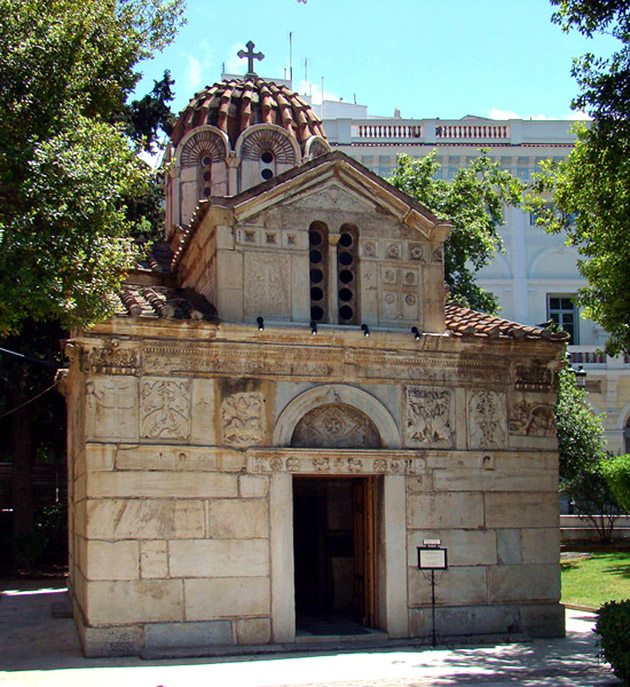
The Pentelic marble used to construct ancient Athens proved to be too alluring for Byzantine builders.  You can see blatant example of stone theft in the piece-meal construction of the 13th century Panagia Gorgoepikoos Church in Athens.  While the materials were stolen, the care with which pieces were selected and incorporated suggests some appreciation for classical art.

Panagia Gorgoepikoos, Athens

13th Century Panagia Gorgoepikoos (The Madonna who Quickly Hears) Church, Athens (Image adapted from the web)

Read more

The Isenheim Altarpiece – Art for the Ill

I enjoyed last week’s virtual visit to the incredible Ghent Altarpiece but it got me thinking about other major church pieces I would like to see in person.  While this may not be the most intuitive work of art to bring up, I have always been impressed by the suffering, twisted and tortured Cruxification of the Isenheim Altarpiece now in the Alsatian city of Colmer, France.

Matthias Grunewald, Isenheim altarpiece in situ, Colmar, France

Isenheim altarpiece in situ at the Musee d’Unterlinden, Colmar, France

Read more