Skip to content

Posts tagged ‘art history’

Imagining the Splendor of Ancient Corinth

In the heart of ancient Corinth, between the extensive market and the main road to the sea, there was an Imperial Roman monument that was designed to be unforgettable.  The Prisoner’s Facade was constructed by Septimius Severus (145-211 CE) to celebrate his victory over the Parthians.  The elaborate two-story tapestry in marble depicted vanquished, captured soldiers and the victorious Roman army.  Perhaps the boldest element of the prisoner facade were four sculptural columns that each included a statue of a docile, captured youth in oriental costumes.
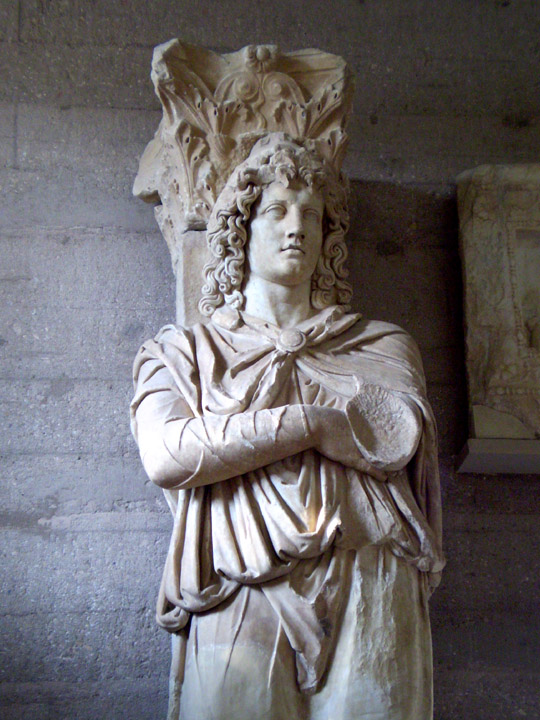
Prisoner column, Corinth

An enigmatic Parthian slave from the ancient Roman “Prisoner’s Facade” in Corinth

This exotic sculpture and fantastic architecture was typical of Corinth – the Roman capital of the Greek province.  Lively, international, and wealthy, ancient Corinth figures into Greek, Roman, and early Christian history.  While today there are only neglected embers of its former glory, you can still picture the excitement of ancient Corinth in the expansive but slumbering ruins and in the unique museum pieces like this beautiful column of a captured man.

Read more

D-Day 70 Years Later – The Omaha Beach Memorial

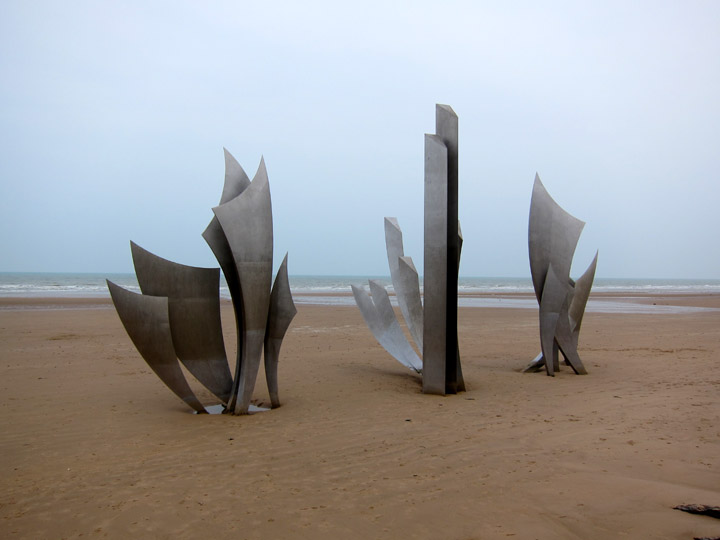
My first impression of Omaha Beach in Normandy was of summer fun.  Alongside the massive stretch of sand, there was a boardwalk dotted with summer beach rentals, ice cream stands and the occasional creperie.  The laughter of a visiting group of British school children added to the ambiance of carefree days.  But anyone who has studied the D-Day landings of June 6, 1944 knows that Omaha was the bloodiest of battlefields of D-Day with some units in the first wave suffering up to a 92% casualty rate.  How do we memorialize the 4,000 who died in a few hours?  Today a bold, modern memorial stands out along the relaxing beach and marks the critical military objective that the American soldiers sacrificed so dearly to achieve.

Omaha Beach Memorial

Omaha Beach Memorial

Read more

Painting with Light: Vermeer’s Interior Scenes

The monthly ArtSmart Roundtable brings together some of the best art-focused travel blogs to post on a common theme.  This month we picked an abstract topic – Light.  Check out all the creative stories below!

I timed my last international trip perfectly.  My entire 12 hour lay-over in Amsterdam would be devoted to seeing the newly renovated Rijksmuseum.  It was definitely worth powering through the jet-lag to visit this incredible collection in its elegant new galleries!

Vermeer, "Woman Reading a Letter",  Rijksmuseum, Amsterdam

Johannes Vermeer, “Woman Reading a Letter”, 1664, Rijksmuseum, Amsterdam

While looking at the Dutch masterpieces in the main gallery including Vermeer’s Woman Reading a Letter, Mr. Tourist asked innocently, “So why are Vermeer’s paintings so famous?

Without even hesitating I answered, “It’s how he painted light.

Read more

Mosaic Treasures at Sepphoris, Israel

You may never have heard of Sepphoris but this former Roman city has some fantastic mosaics.  Also known as Tzippori or Zippori , this archaeological site in the Western Galilee has been excavated over the last 30 years revealing wonderful treasures.  Ignored by tour buses, I had the site to myself  and could enjoy the best and most extensive collection of ancient mosaic art in Israel.

The Mona Lisa of Galilee, Sepphoris

This Roman mosaic Venus is known as “The Mona Lisa of Galilee” for her beauty and enigmatic smile.

Read more

A Hotel with its Own Archaeological Ruins

hostel view

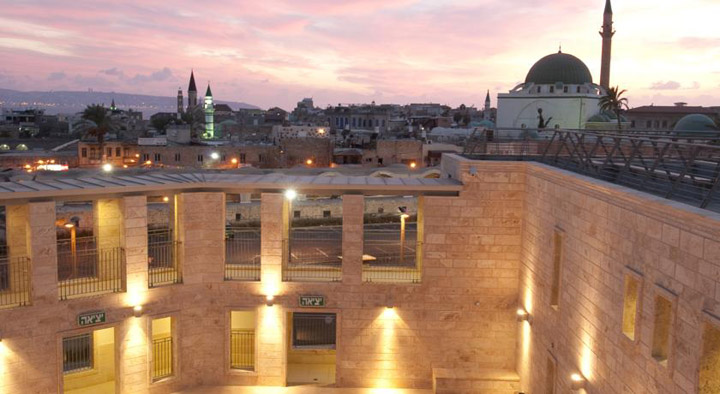
Terrific view of old city from the roof deck of the Akko Knights Youth Hostel (Photo from hostel)

I wrote recently about the old historic core of Acre (or Akko), Israel which is packed with Crusader era ruins.  Since Acre is mostly a day-tripper’s destination, we stayed a night in the only accommodations in the old city – a youth hostel.  Apparently you can’t dig anywhere in the Acre without discovering an archaeological site!  I was surprised to find that our youth hostel had its own set of ruins on site and did an excellent job exhibiting them as natural elements of the hostel premise.

Read more