Skip to content

Posts tagged ‘art history’

A Vision of Nature: The Designs of William Morris

The monthly ArtSmart Roundtable brings together some of the best art-focused travel blogs to post on a common theme.  This month we are discussing Art and Nature.  Check out all the stories below!

William Morris - Strawberry Thief

One of my favorite William Morris designs, “Strawberry Thief,” 1883 (Photo: Victoria & Albert Museum)

Nature has inspired some of the most amazing art – from the representational, majestic landscapes of the Hudson River School to the stylized, curling flowers of the Art Nouveau.  A painted landscape was one way to bring the environment back into our homes.  The Arts & Crafts movement went one step further and sought to bring the beauty of nature inside and incorporate it into our furnishings and decorations.  No one did more to turn parlors into romantic gardens like the British designer William Morris.

Read more

The Life of A Painting: Leonardo da Vinci’s St. Jerome in the Wilderness

We take it for granted that paintings should be shown behind glass, watched by security, and protected in museums. However, for centuries a piece of art was just another personal possession.  Someone could have a painting altered just as easily as having pants hemmed.  Even pieces by the great masters were not immune to harsh treatment.  Even an incredible painting by the Renaissance genius Leonardo da Vinci was carved up and nearly lost.

Leonardo da Vinci "Saint Jerome in the Wilderness", Vatican Museums (Pinacoteca), Rome

Leonardo da Vinci “Saint Jerome in the Wilderness (unrestored)”, Vatican Museums (Pinacoteca), Rome (Photo: Wikimedia)

Read more

The Imperial Treasury of Vienna

The monthly ArtSmart Roundtable brings together some of the best art-focused travel blogs to post on a common theme.  This month we are discussing Hidden Gems.  Check out all the stories below.  At the risk of being too literal, I’m bringing you a story of a “hidden gem” museum filled with gems!

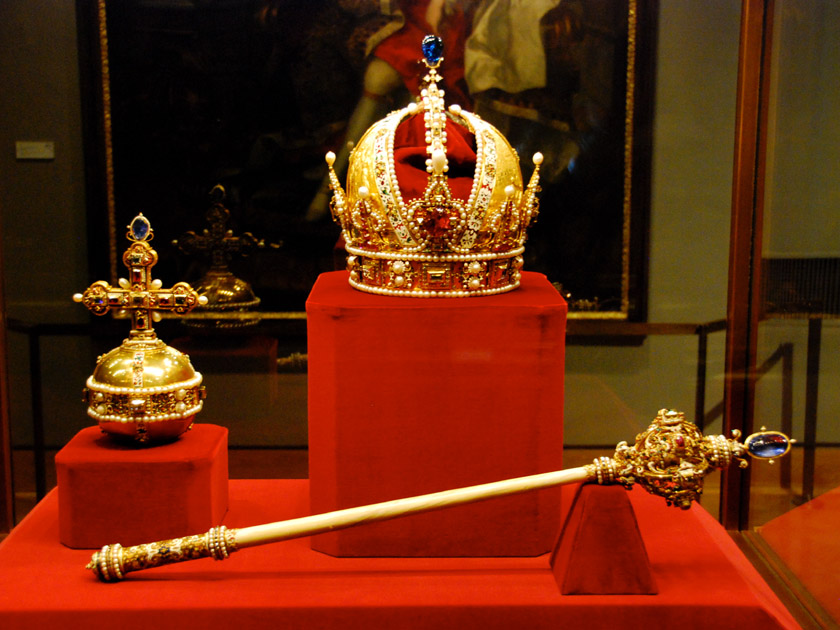
Imperial Crown, Orb, and Sceptre of Austria

Imperial Crown, Orb, and Scepter of Austria created between 1602-1615. (Photo: Michiel2005, flickr)

You don’t have to be an art or history focused traveler to appreciate real jewels.  There is something about gold and gemstones that just draws people in as we gaze at the glittering wealth, power, and beauty of these objects.  The most impressive collection of priceless jewelry that I’ve ever seen belonged to a real royal dynasty.  The House of Habsburg oversaw a massive and prosperous empire for roughly 800 years.  Sometimes lost in a city of fantastic art and architecture, you must visit the spectacular family jewels housed in the Imperial Treasury of Vienna.

Read more

A Evening Stroll Through Rimini

Sunset and early evening are my favorite time of day in Italy.  Rather than retreating home, it seems like everyone pours into the streets for strolling, shopping, or an aperitif with friends.  Even public festivals and fairs continue on through these waning hours.  While my days in Rimini, Italy where busy with TBDI 2014, it was still a pleasure to enjoy the city with an early evening walk through its historic heart amid the vibrant nightlife.

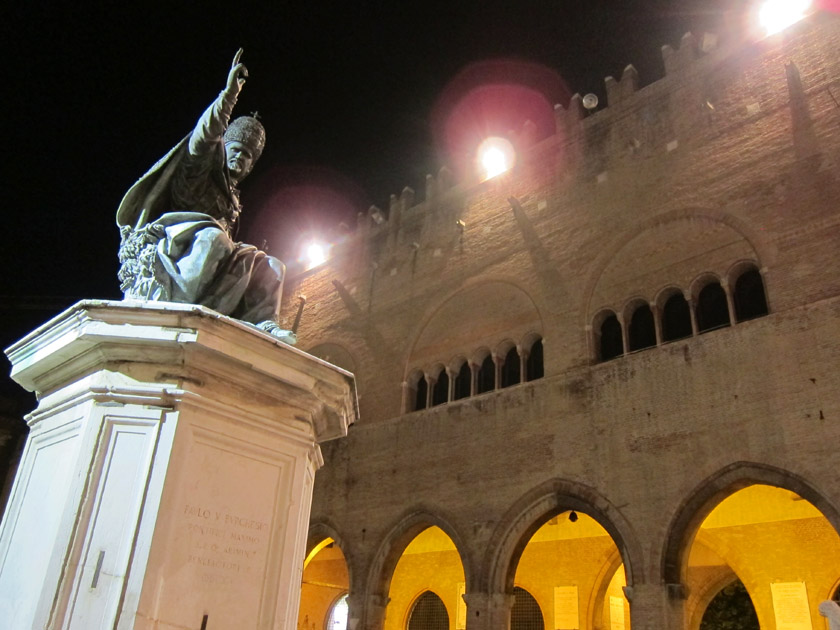
Piazza Cavour at night, Rimini

Statue of Pope Paul V and the civic Palazzo dell’Arengo building in Piazza Cavour, Rimini

Read more

Caesar and the Snail: “Royal Purple” in Imperial Rome

The monthly ArtSmart Roundtable brings together some of the best art-focused travel blogs to post on a common theme.  This month we are discussing Color.  Check out all the stories below!

As the old saying goes – “Clothes make the man.”  Nowhere is this more true than in Ancient Rome.  They had a purple dye so rare and so valuable that wearing it was reserved for the elite.  Eventually only the Emperor was allowed to wear full garments of this color, known as Tyrian purple.  So where did this precious color come from?  A sea snail native to Lebanon.

Justinian in purple

Emperor Justinian I wears a purple robe while his chief advisers have a broad stripe of purple in their garments. The Byzantines inherited the connection between purple and power.  This mosaic is from Basilica of San Vitale, Ravenna (Photo)

Read more