Skip to content

Posts tagged ‘art’

Maybe the Best Russian Icon Collection in America

The other day I wrote about the Eastern Orthodox iconography of John the Baptist.  Let me take a step back now and spend a little more time on the amazing institution where I saw those pieces: The Museum of Russian Icons.  Located in Clinton, MA, about an hour drive from Boston, the modern facility displays hundreds of excellent Russian icons.  It was such a pleasant surprise to find this small museum; it is definitely one of my favorite New England hidden gems.

The Museum houses the personal collection of Gordon B. Lankton.  An executive at a plastic company, he bought his first icon at a flea market in Russia while on a business trip.  Mr. Lankton became fascinated by the style and imagery and returned from his subsequent business trips with more icons.  (Now new pieces are acquired through well-respected international auction house.)  With well over 100 icons, Mr. Lankton decided the collection would be best displayed at a museum, but a suitable organization could not be found in New York City or Boston.  He then decided to keep the icons in Clinton and so the current Museum was opened in 2006 in a renovated carpet factory.  The museum space is elegant and an excellent platform for enjoying the art.  The Museum now has over 500 icons and objects in its collection and has a friendly and informed staff.  With 12,000-17,000 visitors annually, you’re also likely to enjoy the works with some peace and quiet.

Images of the collection were taken by me, except the last one of the museum interior.

Mother of God Russian icon

"Vladimir Mother of God" circa 1680 (Museum of Russian Icons)

Russian icon damage

Lower central detail of "Vladimir Mother of God" showing candle damage (Museum of Russian Icons)

Saint Nicholas Russian Icon

"Saint Nicholas of Zaraisk, The Wonderworker and Holy Bishop of Myra with Scenes from his life" Suzdal School, 16th Century (Museum of Russian Icons)

cloth Russian icon

Detail from "Christ, Not Made by Hands (Allegory)", circa 1600 (Museum of Russian Icons)

Mary Magdalene Russian icon

"Mary Magdalene" circa 1890 (Museum of Russian Icons)

The honor system cafe (pay at the gift shop upstairs) is a nice touch with imported Russian treats, a hot beverage machine and these antique tea kettles.


Interior of the Museum

Modern interior of Museum of Russian Icons (Image from Wikipedia)


Surprising Iconography of John the Baptist

Traveling in Europe is so much more interesting if you understand the iconography of Christian art.  You can quickly recognize the stories played out in panel painting or identify individual saints on the facade of a Cathedral.  Once you get past the “who and what” fundamentals of a work of art, you can examine the execution and atheistic choices the artist made in depicting the Annunciation, the Descent from the Cross, St Peter or St Catherine.  That is, I thought I knew the major iconography of the Saints.

John the Baptist - El Greco

El Greco “John the Baptist”, M. H. de Young Memorial Museum, San Francisco

St. John the Baptist is easy to pick out of a line up: under dressed and in camel hair, many times with a staff or lamb and generally looking disheveled.  Given his importance, John is often one of the first Saints to be included in domestic devotional altarpieces and is usually placed prominently in larger groupings.

"The Last Judgement Triptych" by Hans Memling

John the Baptist (with the bare knee) sits on the right, the counterweight to Mary in this detail of “The Last Judgement Triptych” (1467-71) by Hans Memling (Muzeum Narodowe, Gdansk)

Last week, I visited the Museum of Russian Icons in Clifton, MA.  (Their collection is incredible; I’ll post more on that soon.)  I was enjoying the range of Mary and Child iconography (hurray Hodegetria), when I noticed something really surprising.

"Smolensk Mother of God" by the monk Filaret (c. 1680), Museum of Russian Icons

“Smolensk Mother of God” by the monk Filaret (c. 1680), Museum of Russian Icons

On the left frame is a small winged angel Gabriel figure but on the right frame is St. John the Baptist with wings.  With the fur robe and scruffy face, it is undeniably John the Baptist.  I was really confused by this;  Saints are never depicted with wings.

"Smolensk Mother of God" by the monk Filaret (c. 1680), Museum of Russian Icons

Frame detail from “Smolensk Mother of God” by the monk Filaret (c. 1680), Museum of Russian Icons

While I did see other “regular” images of St. John the Baptist throughout the museum’s icons, wings popped up again in one other piece.  In the lower half of this work, there is a beheading scene (right) and the head being given to a woman (left) further providing evidence that the central figure is St. John the Baptist.

St. John the Baptist with Wings, Museum of Russian Icons

I was really intrigued by John the Baptist with wings so I talked with one of the museum docents.  In Russian iconography (like most Christian art), angels have wings.  But besides the seraphim, there is a set of angel that act as messengers.  Their wings symbolize the ability to communicate between the divine and humans.  For example, the three travelers/angels who visited Abraham are popular in Russian art.  One iconographic aspect of John the Baptist is his role as prophet declaring the arrival and ministry of the Christ.  In this way, John acts like a divine messenger and can therefore be shown with wings.  John is also the only Saint ever shown in Russian art with wings, perhaps given that he was Jesus’ cousin and played a critical role in the gospels.

Finding these angelic wings brings an interesting nuance to the John the Baptist visual program.  In the two cases I found, he is holding a scroll which is in line with the messenger role the wings suggest.  It is also a nice example of differences between the Western and Eastern Christian art traditions.  I wonder if the rules really are so strict for depiction with wings?  Could this divine messenger aspect apply to Old Testament prophets too?  That image would have to present a prophet in a heraldic way, but surely it’s possible.  I guess I have something new to look for in the catalog of Eastern Orthodox art!  But there you have it, St. John the Baptist with angel wings.

Photo of the Week – Garden Creature

Peacock in the garden planters (Photo: DaydreamTourist)

My New Years resolution was to try to carry a camera with  me more often. I was pretty quickly rewarded for this in 2012!  After finishing up tasting at the Chateau Ste. Michelle Winery in Woodinville, Washington, I came outside to see this peacock perched on some planters.  While I am still getting use to my new camera, I like the composition and colors of this photo.

Reconstructing Art: Duccio’s Maesta

1878 Iguanodon

In1878 this seem like a fine reconstruction of an Iguanodon, despite the fact that its tail would be broken in this posture. (Photo: University of Bristol, Earth Science Dept.)

Walking through the ruins of the Acropolis and looking over the plaster copies of the Parthenon Frieze this last fall, I tried to put it all back together visually.  Thankfully there were digital reconstructions to look to, but I got to wondering if wholesale reconstruction of a work of art is even possible.  In most cases, pieces can be broken or destroyed and critical details of the overall assembly can be lost.  (It’s a tangential example but I’m thinking of all the miss-assembled Victorian dinosaur skeletons.)  Then I remembered Duccio’s Maestà in Siena.

The Three Marys at the Tomb by Duccio, part of the Maestà altarpiece in Siena (Photo: Web Gallery of Art)

Duccio’s expansive Maestà Altarpiece was installed in the Siena Cathedral on June 9, 1311.  The double sided piece is estimated to have been 4.7 by 5 meters in dimension.  It was composed of a central panel (The Virgin and Christ Enthroned with Saints and Angels) and over 70 smaller scenes depicting New Testament iconography.  Sadly this grand style of altarpiece went out of fashion and in 1711, the panels were dismantled, sawed apart, and dispersed.  Most of the pieces are now back in Siena. Careful scholarship, analysis, and restoration has shed light on its original construction and composition.

Maesta alterpiece

Virgin and Child panel of the Maesta alterpiece by Duccio, Museo dell’Opera, Siena (Photo: profzucker, Flickr)

The Maestà altarpiece is not displayed in its reconstructed state which allows for better viewing of the visually rich story panels.  These were likely executed by Duccio’s workshop but are all interesting.  The central Virgin and Child panel alone is incredibly impressive.  I remember seeing it at the Museo dell’Opera del Duomo in Siena.  The room was fairly dark with a few spotlights on the panel which made the gilding glow.

Duccio Maesta front panel

Duccio Maestà front panel reconstruction with missing pieces shown in gray (Image: DaydreamTourist)

On the front of the altarpiece would have been a Marian cycle in the pinnacles and the birth and childhood of Jesus in the lower predella. The reverse panel depicts the Passion sequence in the main section and scenes from the ministry of Christ along the pinnacles and predella. In the reconstruction images above and below, panels not presently in Siena are shown in black and white (missing panels are not shown).  You have to actually go to Washington DC and Madrid respectively to see two of my favorites: the Nativity with Isaiah and Ezekiel and Christ and the Samaritan Woman.  It is also possible to appreciate how pieces may have been shaved and shaped since being freed from the altarpiece frame.  I have also accepted the interpretation that a piece showing the coronation of the Virgin now in Hungry was featured in the central front panel pinnacle.  This makes sense thematically in the context of the smaller pinnacle images showing the life of Mary and would be appropriate subject matter for the period and location.  The reconstructions also assumes that the pinnacle angels mirrored each other since only 4 of the 12 total exist today.

Duccio Maesta back

Duccio’s Maestà back panel assembly with missing pieces noted in gray (Image: DaydreamTourist)

Viewed as a whole, the complexity and ambitiousness of the project is evident.  Whether or not the framing decorative elements are exactly correct is a moot point given the wealth of visual story-telling and the fairly confident reconstitution of the narrative flow.  It’s amazing that almost all of the panels have survived.  The Maestà demonstrates that reconstruction, at least digitally, goes a long way in understanding the artist’s intentions, the work’s visual impact, and how contemporary viewers would have encountered the piece.

Reconstructions adapted from the Web Gallery of Art.

Reference: Siena, Florence and Padua: Art Society and Religion 1280-1400, Volume II: Case Studies, edited by Diana Norman, 1995.

My perfect portrait

Françoise GilotWhen I started DaydreamTourist, Picasso’s portrait of Françoise Gilot was a convenient logo.  I even joked in the About section that this is what I look like if he had painted me.  But that got me thinking.  Of all artists past and present, who would I want to create my portrait?

I should say I have always loved portraiture.  The end result is a blend of both how the sitter (or their family) wanted the individual to be represented, what society valued at the time, maybe some of what the artist thinks of the subject and, if you’re lucky, a realistic likeness of someone who once existed.

Domenico Ghirlandaio “Portrait of Giovanna Tornabuoni” is a lesson in wealth and virtue as an elegantly put together woman sits amid her possessions.  Her rigidity reflects her status which is emphasized by the inscription, O art, if thou were able to depict the conduct and soul, no lovelier painting would exist on earth.

Domenico Ghirlandaio - Portrait of Giovanna Tornabuoni

Domenico Ghirlandaio “Portrait of Giovanna Tornabuoni” 1489-1490, Museo Thyssen-Bornemisza, Madrid

There is something to be said for sentimentality and tenderness.  For example, Norman Rockwell’s Richard Nixon seems friendly, familiar and just a tad endearing.

Normal Rockwell - Richard Nixon

Norman Rockwell “Richard Nixon”, 1968, National Portrait Gallery, Smithsonian Institution, Washington, DC

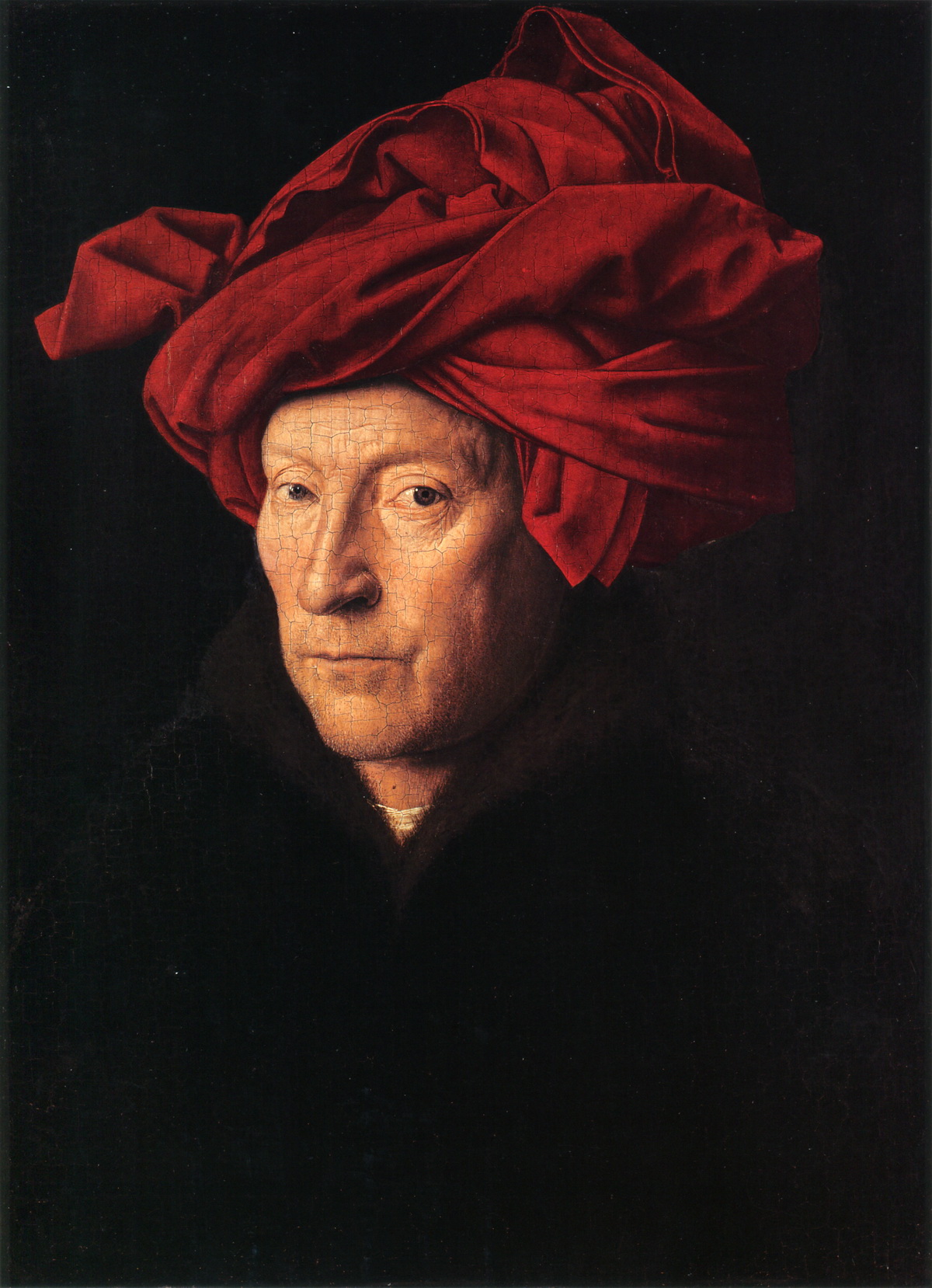
Many of my favorite masters of realism worked during the Northern Renaissance and produced luminous life-like figures.

Portrait of a Man in a red turban by Jan van Eyck

Jan van Eyck, “The Portrait of a Man” (or “Portrait of a Man in a Turban”)  1433, National Gallery, London

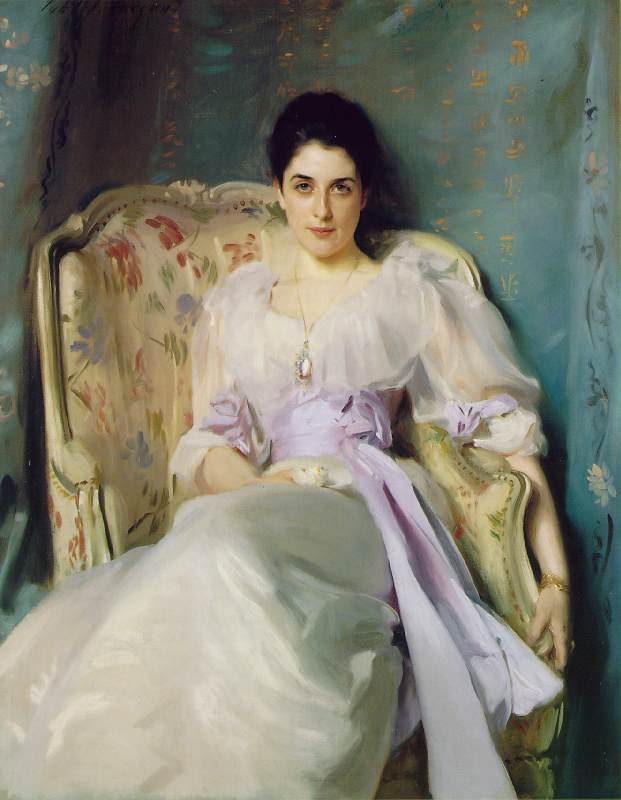
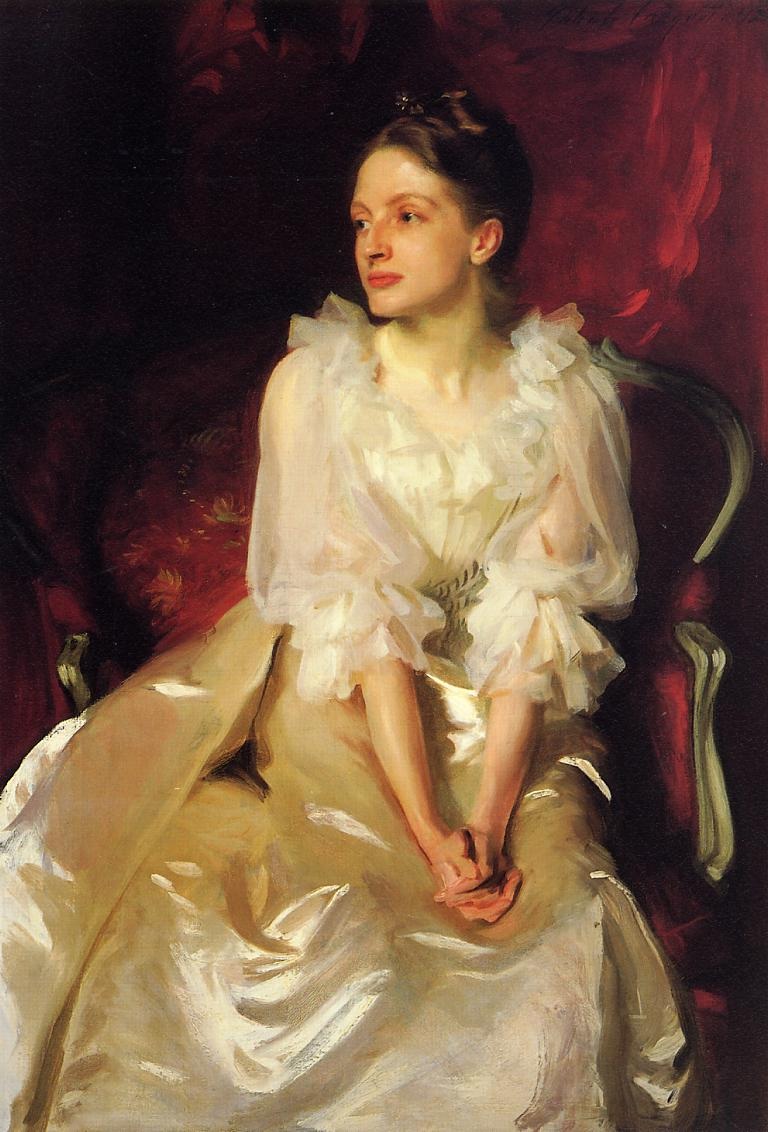
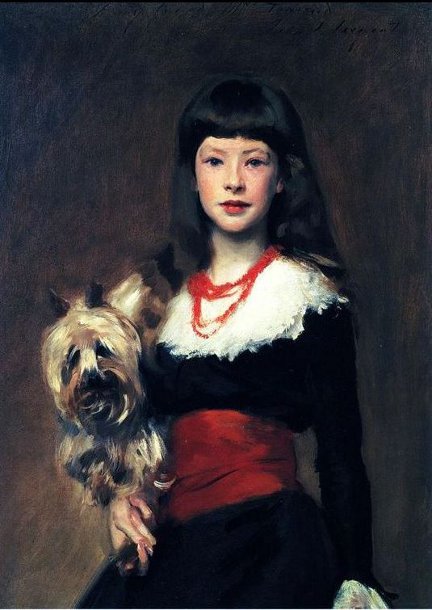
Without a doubt though, I would want my portrait done by John Singer Sargent.  I have heard it said that Sargent liked painting women and it shows in his work.  Looking at his pieces, you start to understand the personality of his subject through quirks in their poses, faces or the portrait’s composition.  I have also admired the fluidity and range of his brushwork moving from well executed facial features to impressionistic clothing and abstracted backgrounds.

John Singer Sargent "Lady Agnew of Lochnaw"

John Singer Sargent “Lady Agnew of Lochnaw”, 1892-93 National Gallery of Scotland, Edinburgh

John Singer Sargent "Mr. and Mrs. I. N. Phelps Stokes"

John Singer Sargent “Mr. and Mrs. I. N. Phelps Stokes” 1897, Metropolitan Museum of Art, New York City

John Singer Sargent, "Miss Elsie Palmer"

John Singer Sargent, “Miss Elsie Palmer”, 1889-90, Colorado Springs Fine Arts Center

John Singer Sargent - Mrs. Edward Darley Boit

John Singer Sargent, “Mrs. Edward Darley Boit” 1887, Museum of Fine Arts, Boston

John Singer Sargent “Miss Helen Dunham”, private collection

john singer sargent  - beatrice townsend

John Singer Sargent, “Beatrice Townsend” 1882, National Gallery of Art, Washington, DC

I suppose I should also point out that his portraits of men were really amazing too.

John Singer Sargent - Robert Louis Stevenson

John Singer Sargent, “Robert Louis Stevenson” 1887  The Taft Museum, Cincinnati

John Singer Sargent - Arthur James Balfor

John Singer Sargent, “Arthur James Balfor” 1908, National Portrait Gallery, London

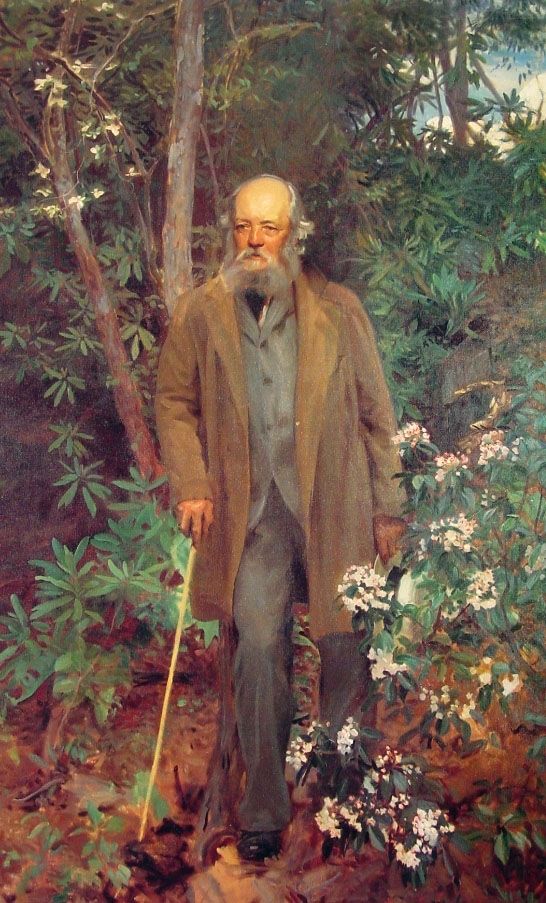
John Singer Sargent - Frederick Law Olmsted

John Singer Sargent “Frederick Law Olmsted”, 1895, Biltmore House, Asheville, North Carolina

Thanks to the John Singer Sargent Virtual Gallery for images and inspiration.