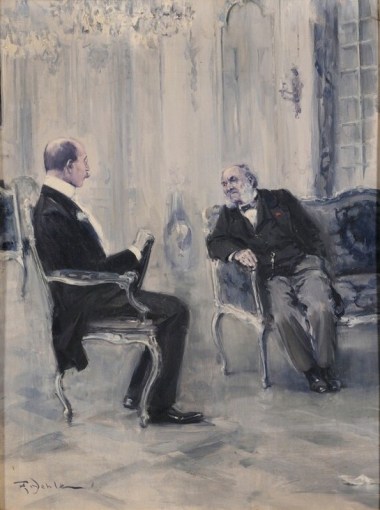
So what is this painting that inspired the Friedrch Wahle Project? Let me described “The Discourse” for you and hopefully you’ll understand why I want to know more about it.
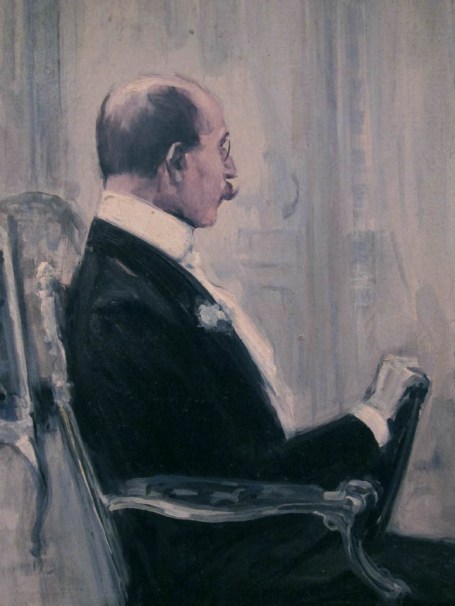
The parlor setting suggests importance with its sparkling chandeliers, large vase, fine furniture and tall windows. I’m imagining a palace in which this is some elegant anti-chamber. The younger man’s high collar, mustache, tail-coat and shiny shoes seem very fashionable and certainly trendier than his companion’s clothes. I’m struck by how formal and erect the younger man is sitting. The way he holds his papers like a shield in his lap seems defensive. The old man is rumbled and slouching. His face is weary but concerned. The older man leads in toward the other man but leaves his left hand in his pocket rather than gesture as if lecturing the younger man.

I see these two men as political insiders waiting for an audience with a Duke or Emperor. The younger man is mid-career and rising, duty-bound, loyal and a strict believer in protocol. Perhaps aspiring to become part of the inner circle, he’s working to make himself indispensable to the Duke and maybe has the details to some special project in his folio. On the other hand, the older man has a long history in the court. He was maybe even an adviser to the Duke’s father and is there to ask another favor using his long years of service as collateral. He understands restraint, compassion and compromise. Maybe they’ve never met before, but he knows of the younger man and is trying gently to offer some advice. Clearly the younger man is not having any of this. This delicate tension is very fascinating to me. What does the experienced man say to the assured, determined man? What happens when the Duke’s attendant brings one of them in and the two story-lines diverge? I can’t look at his painting without imagining some other way their conversation may have played out.
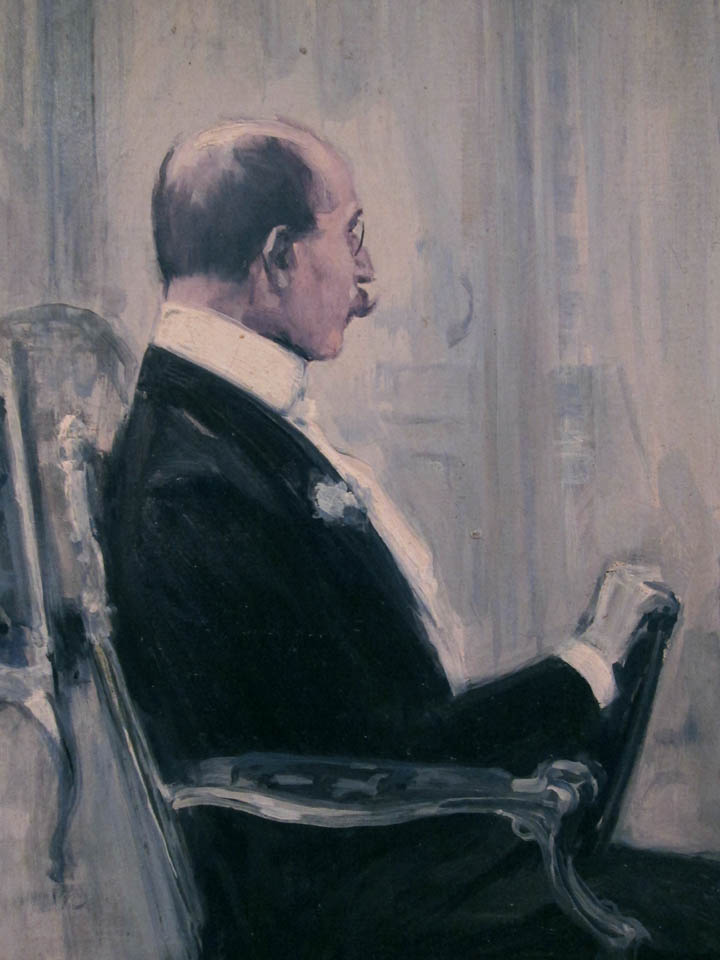
Aside from the narrative elements of the painting, it is well executed. The time period in which Wahle worked (broadly 1883-1927) saw the rise and heights of Impressionists which I can see influenced this piece. There is still an incredible amount of detail and realism in the old man’s face which balances out the broad strokes of flooring that give way to blank art board around the signature. If this was an illustration and therefore printed in black and white, the blue-gray canvas makes sense. It also means the beautiful dab of red on the old man’s label was bit of whimsy on Wahle’s part. (I guess it’s also just as likely that the red was added later but that’s going to be very hard to prove either way.) The overall color of the piece does seem a little drab and yellowed; at some point I will look into having the painting cleaned.
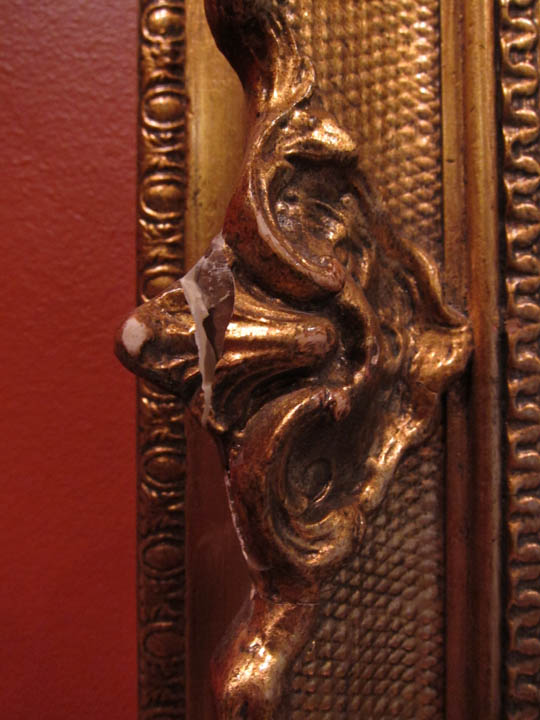
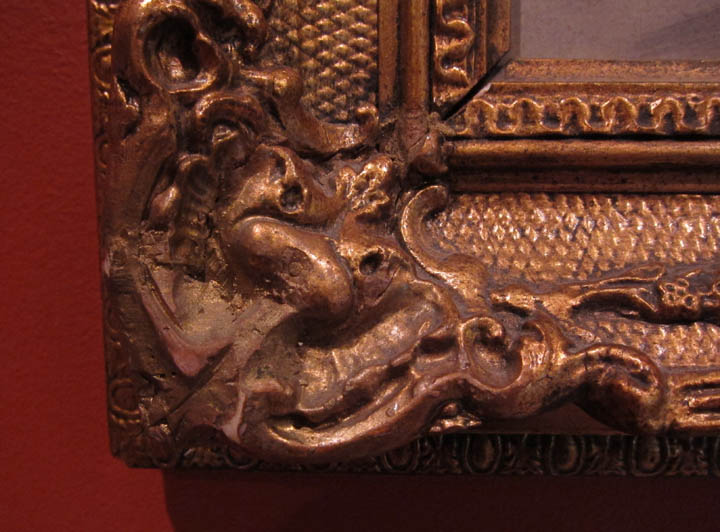
The frame appears to be period to the painting; it is not however in good condition. There are a couple of chips to two of the decorative elements and the bottom corners appear to be partially rebuilt with some type of painted putty. I can’t imagine that the damage was recent because the painting (oil on artist’s board) is nailed into the frame and has the tale-tail oxidation of time. Paper clearly covered the back of the frame but its been cut off a long time ago. There is no writing on the back of the painting beside the London based board manufacturer’s watermark.
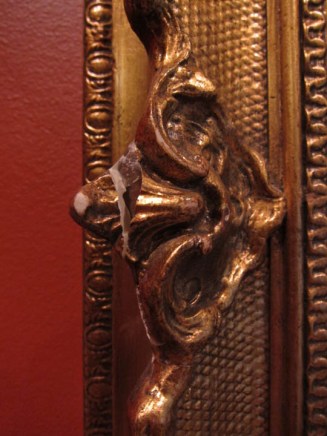
Chipped frame element that was not filled in
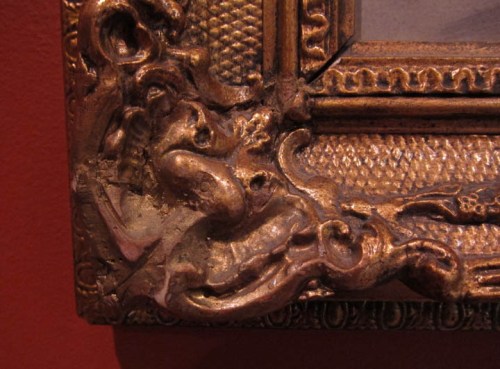
About half of this decorative element seems to have been patch and reformed but its not a perfect repair job
I know very little about the provenance of the painting. It was consigned to auction from an estate sale. The consigner seemed to think that it was once sold at Sotheby’s or Christie’s although there are no labels on the back of the paint to suggest this. (And of course naming the big international auction houses makes a work seem more valuable if you’re trying to sell it.) I can make some estimate on the painting’s date based on the men’s clothes. I think the younger man’s high collar was popular around 1890-1910 but I could look into that some more. The older man’s mutton chops are definitely not much help.










 Daydream Tourist