Skip to content

Posts tagged ‘architecture’

Byzantine Fort City of Mystras, Greece
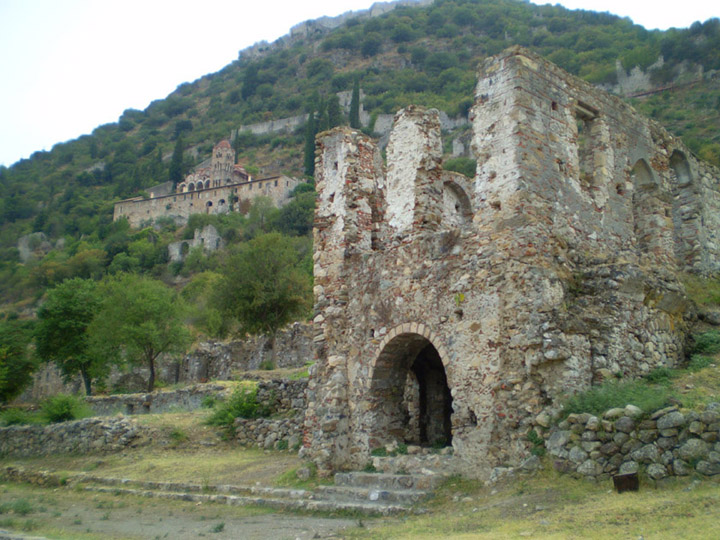
Monestary of Pantanassa, Mystras

Looking up from the ruined domestic buildings of the lower city, you can see the active Monastery of Pantanassa further up the mountain in the the Upper City of Mystras, Greece.

So many European cities are jumbles of art and architecture, a testament to the evolving history of the urban area.  Beneath these modern cities are fractured layers of a Renaissance, Gothic and Ancient past, but you have to try hard to imagine how things looked during any one period.  It’s truly amazing to find a city that retains its character from one specific age.  The abandoned Byzantine city of Mystras in the mountains just above Sparta in the Southern Peloponnese, is one such frozen city.  You can walk through the ruined streets and largely intact religious buildings of this UNESCO World Heritage Site and be right back in 1350 AD.

Read more

Hagia Sophia Trompe L’Oeil

Hagia Sophia trompe l'oeil, optical illusion painting

Something is not quite right with the Hagia Sophia gallery level.

The Hagia Sophia in Istanbul is one of the most beautiful buildings in the world.  The dome upon dome design creates an immense open space, but things are not exactly as harmonious as they seem.  To cover up the huge support structure, trompe l’oeil murals were added in the 19th century so that gallery would appear more uniform.  Finding these panels while you take in the breath-taking sight is an odd touch of reality in an otherwise divine architecture.

Read more

Exploring with The Keeper of the Castle

The monthly ArtSmart Roundtable brings together posts from some of the best art history-focused travel bloggers.  For December, we are discussing some of our favorite art and travel experiences.  You can find links below to all the group’s articles.

I’ve been lucky enough to see some really incredible art in person, in situ and sometimes under incredible circumstances (like seeing the Florence Baptistry for the first time as part of a religious procession!)  For me, a memorable travel and art experience includes encountering beautiful, unique or unknown pieces and places, but also gives me to opportunity to understand a culture or people better.  And so for this month’s theme, I was immediately reminded of my tour of Carrigafoyle Castle in County Kerry, Ireland with the Castle Keeper himself.

Carrigafoyle Castle

Carrigafoyle Castle, constructed in 1480 AD

Read more

Recycled Stone – Christianized Art in Athens

While this practice seems unthinkable today, across the Mediterranean, ancient Greek and Roman structures were salvaged for building materials in subsequent centuries.  Given the prevalence of the Catholic Church in the Middle Ages, pagan buildings were at best a curiosity.  The Parthenon in Rome is said to have only survived because it was converted into a church.

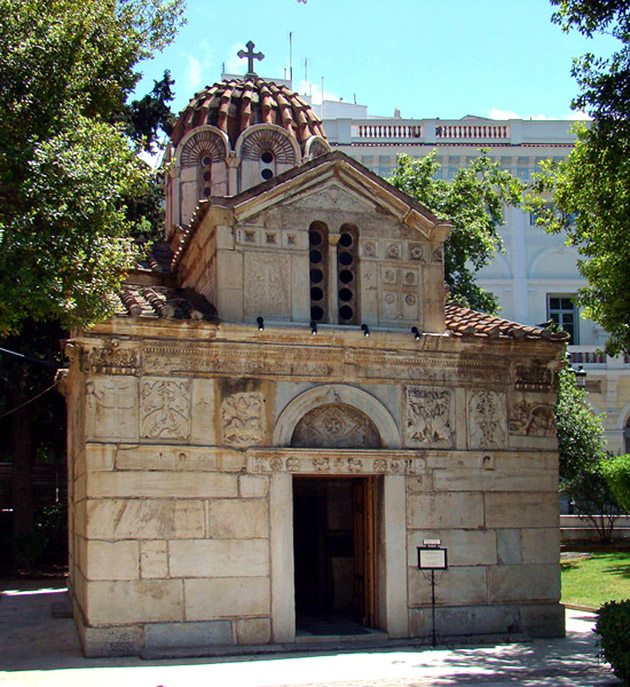
The Pentelic marble used to construct ancient Athens proved to be too alluring for Byzantine builders.  You can see blatant example of stone theft in the piece-meal construction of the 13th century Panagia Gorgoepikoos Church in Athens.  While the materials were stolen, the care with which pieces were selected and incorporated suggests some appreciation for classical art.

Panagia Gorgoepikoos, Athens

13th Century Panagia Gorgoepikoos (The Madonna who Quickly Hears) Church, Athens (Image adapted from the web)

Read more

Revisiting Hopper’s Lighthouse

Recently, I took some time to explore Southern Maine.  Besides great fall foliage, hiking and lobster (which were all also part of my trip!), the state is known for its majestic lighthouses.  I was able to visit a few including the beautiful one at Cape Elizabeth outside Portland.  This lighthouse in particular may already be familiar to lovers of American art.

American realist painter Edward Hopper (1882-1967) may best be known for his psychological urban scenes (like Nighthawks and Chop Suey) but he also painted lovely landscapes.  Over the course of nine summers between 1914 and 1929 spent in Maine, he produced numerous oil sketches and watercolors exploring the coastline and its small villages.  These soft and calm images seem somewhat incongruous with what I encountered in Maine where the coastal environment was rocky, rough and stark.

Edward Hopper, Lime Rock Quarry II, 1926, watercolor, private collection

Do you think this is this Montana, Arizona or in fact Rockland, Maine? – Edward Hopper, Lime Rock Quarry II, 1926, watercolor, private collection

Read more