Skip to content

Posts from the ‘Art History’ Category

ArtSmart Roundtable – Copley Library Galleries in Boston

The monthly ArtSmart Roundtable brings together posts from some of the best art history-focused travel blogs on a common theme.  For January (and just in time for your 2013 travel planning), we are discussing “The Best Museum You’ve Never Heard Of”.  This is a great topic and I can’t wait to read about all the great finds from the rest of the roundtable!  You can find links below to all the group’s articles.

Boston has some incredible art museums – The Museum of Fine Arts (MFA), the Isabella Stewart Gardner Museum, the Institute of Contemporary Art and the (currently condensed) Harvard Art Museums .  While I definitely recommend these places, some of my favorite paintings in Boston are actually public art in the central library!  The Copley Square Library was constructed in 1895 and was decorated in a Renaissance revival and Beaux Art style.  Inside are three incredible and overwhelmingly beautiful mural cycles including one by my favorite portrait painter.  The Galleries are free, open to the public 6 days a week and worth a trip for any serious art lover. Read more

Hagia Sophia Trompe L’Oeil

Hagia Sophia trompe l'oeil, optical illusion painting

Something is not quite right with the Hagia Sophia gallery level.

The Hagia Sophia in Istanbul is one of the most beautiful buildings in the world.  The dome upon dome design creates an immense open space, but things are not exactly as harmonious as they seem.  To cover up the huge support structure, trompe l’oeil murals were added in the 19th century so that gallery would appear more uniform.  Finding these panels while you take in the breath-taking sight is an odd touch of reality in an otherwise divine architecture.

Read more

A Space for All: Engineering Contemporary Art on Fuerteventura

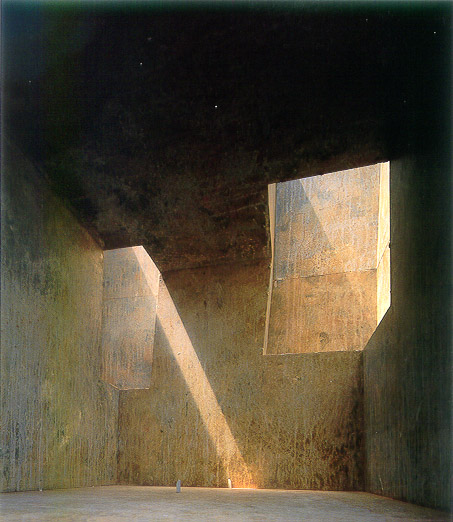
Chillida Cavern, Mount Tindaya, Fuerteventura, Canary Islands

Mock up drawing of Eduardo Chillida’s Cavern on Mount Tindaya, Fuerteventura, Canary Islands (Image: Arup)

Sunlight will slowly drift over the seamless stone walls, encompassing visitors in a silent shine to humanity.  This cavernous space was the vision of Basque artist Eduardo Chillida (1924-2002).  The actualization of his monumental work of art has been fraught with environmental, historical preservation and construction concerns.  Today things are back on track and the Chilida Tindaya cavern is poised to be one of the most impressive achievements of contemporary art.

Read more

Painted Roman Statue

By traveling in Greece and Turkey, I’ve learned a lot more about Classical art and architecture.  I find myself describing the ancient sites I’ve  seen and usually slip something in about how “bright and colorful” it must have been.  That usually stops the conversation.  No one believes that ancient Greek and Roman statues were painted!  I myself am still trying to wrap my head around what that would have looked like.  But it’s true, and now I have my own photographic evidence that statues were colorful:

Painted ancient Roman general statue in Corinth

Read more

Recycled Stone – Christianized Art in Athens

While this practice seems unthinkable today, across the Mediterranean, ancient Greek and Roman structures were salvaged for building materials in subsequent centuries.  Given the prevalence of the Catholic Church in the Middle Ages, pagan buildings were at best a curiosity.  The Parthenon in Rome is said to have only survived because it was converted into a church.

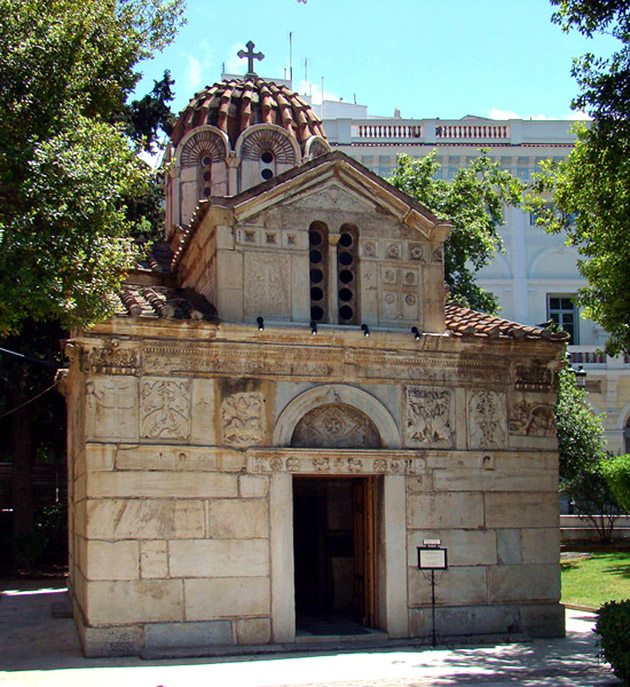
The Pentelic marble used to construct ancient Athens proved to be too alluring for Byzantine builders.  You can see blatant example of stone theft in the piece-meal construction of the 13th century Panagia Gorgoepikoos Church in Athens.  While the materials were stolen, the care with which pieces were selected and incorporated suggests some appreciation for classical art.

Panagia Gorgoepikoos, Athens

13th Century Panagia Gorgoepikoos (The Madonna who Quickly Hears) Church, Athens (Image adapted from the web)

Read more